
Miscarriage Recovery and Trying to Conceive Again: A Complete, Compassionate Guide
Miscarriage Recovery and Trying to Conceive Again: A Complete, Compassionate Guide
Miscarriage is one of the most common and yet most isolating experiences in reproductive health. Affecting approximately 10–20% of known pregnancies (and likely more when including very early losses), miscarriage is statistically frequent — and emotionally devastating in ways that medical statistics can never fully convey. If you're reading this after experiencing a pregnancy loss, the first thing to know is this: you are not alone, and in the vast majority of cases, miscarriage does not mean you can't have a healthy baby.
This guide is written to support women and couples through the physical and emotional recovery process, provide evidence-based information about when and how to try again, and offer practical strategies to support conception in subsequent cycles.
Understanding Why Miscarriage Happens
The most important thing most people don't know about miscarriage is that the majority of early losses are caused by chromosomal abnormalities in the embryo — typically arising by chance during cell division at fertilisation or in early development. These random chromosomal errors are not caused by anything the mother did or didn't do. They represent a failure at the very earliest stage of development, and the body's response — ending the pregnancy — is a natural protection against continuing with a non-viable pregnancy.
Causes of miscarriage include:
- Chromosomal abnormalities (most common): Account for approximately 50–70% of first-trimester losses. The risk increases with maternal age
- Uterine structural issues: Such as fibroids, polyps, or uterine septum, which may affect implantation or pregnancy support
- Hormonal factors: Including inadequate progesterone in the luteal phase, thyroid disorders, or diabetes
- Immunological factors: Antiphospholipid syndrome (APS) is associated with recurrent pregnancy loss
- Lifestyle factors: Smoking, excessive alcohol, and certain medications are associated with increased miscarriage risk
- Unexplained causes: In a significant proportion of cases, particularly after a single loss, no specific cause is identified
Understanding the likely cause — or accepting that a cause may not be identifiable — is an important part of the recovery process.
The Physical Recovery From Miscarriage
Ready to Give Your Fertility Journey Every Advantage?
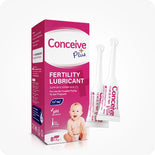
Conceive Plus is trusted by couples and fertility specialists worldwide. pH-balanced, sperm-friendly, and enriched with calcium and magnesium ions.
Shop Conceive Plus Now →Physical recovery from miscarriage varies depending on how the pregnancy was lost: naturally (expectant management), with medication (misoprostol), or surgically (evacuation of the uterus under sedation, also called ERPC, D&C, or MVA depending on the technique).
Expectant and Medical Management Recovery
Following a natural or medically managed miscarriage, the body typically takes 1–3 weeks to fully pass pregnancy tissue and for bleeding to stop. A period should return within 4–6 weeks in most cases. The first period after miscarriage may be heavier or lighter than usual and may be accompanied by irregular timing.
Surgical Management Recovery
Following surgical evacuation, physical recovery is typically faster — most women feel physically well within a few days. Light bleeding may continue for 1–2 weeks. As with expectant management, the first period usually returns within 4–6 weeks.
Monitoring for Complications
Seek medical advice if you experience any of the following after a miscarriage:
- Fever above 38°C
- Heavy bleeding (soaking more than one pad per hour for 2+ hours)
- Foul-smelling discharge
- Severe pain not controlled by over-the-counter pain relief
- No period within 6–8 weeks
These may indicate complications including infection, incomplete evacuation, or Asherman's syndrome (intrauterine adhesions).
The Emotional Recovery: Grief, Identity, and Moving Forward
The emotional impact of miscarriage is profound and variable. Some women grieve intensely; others feel primarily relief that it's over. Many experience a complex, shifting combination of grief, guilt, anger, anxiety, and hope — sometimes all in the same day. All of these responses are valid.
Permission to Grieve
Miscarriage is a bereavement. Even when the pregnancy was very early and the embryo never more than a cluster of cells on a scan, the loss is real: the loss of hope, expectation, and a future that was already being imagined. Give yourself permission to grieve without comparing your loss to others' or minimizing it because "it was early."
The Guilt That Isn't Yours to Carry
Almost universally, women who experience miscarriage wonder if something they did caused it. The truth — grounded in decades of research — is that in the vast majority of cases, nothing you did caused your miscarriage. Exercising, working, having sex, feeling stressed, not knowing you were pregnant and having alcohol, eating certain foods — none of these cause miscarriage. The randomness of chromosomal error is entirely outside your control.
Partners and Relationships
Partners grieve too — often differently and often in ways that can create friction if not acknowledged. Men and partners who haven't experienced the pregnancy physically may grieve less intensely or may focus on "fixing" rather than grieving, which can feel dismissive. Opening conversations about how each partner is feeling, and perhaps seeking couples counselling, can help maintain connection through a loss that affects both of you.
When to Seek Professional Support
If grief is significantly impacting your daily functioning, relationships, work, or sleep — or if you're experiencing persistent anxiety about trying again — please seek support from a mental health professional with experience in pregnancy loss and fertility-related grief. This is not weakness; it's appropriate care for a genuine psychological wound.
When Is It Safe to Try Again After Miscarriage?
This is one of the most common and important questions after pregnancy loss, and the medical guidance has evolved significantly in recent years.
The Old Advice: Wait 3 Months
Traditional guidance recommended waiting 3 months before trying to conceive again after a miscarriage. This recommendation was based on concerns about allowing the uterus to "recover" and on difficulty with dating a subsequent pregnancy. It was not based on evidence that waiting improved outcomes.
Current Evidence: Earlier TTC Is Safe
Multiple large studies — including a significant 2010 WHO study — have found that women who conceive within 3 months of a miscarriage have equal or better pregnancy outcomes than women who wait longer. A major study published in BMJ in 2016 analyzing over 30,000 pregnancies in Scotland found that women who conceived within 6 months of miscarriage had the highest rates of live birth and the lowest rates of complications, compared to women who waited 6–12 months or over 12 months.
Current guidance from major bodies including the Royal College of Obstetricians and Gynaecologists (RCOG) and the WHO reflects this evidence: there is no medical reason to wait before trying to conceive after a miscarriage, once bleeding has stopped and you feel physically ready.
The important caveat is emotional readiness — giving yourself time to grieve before the anxiety and vulnerability of TTC begins again is entirely valid, and there is no rush if you're not emotionally ready.
Supporting Conception After Miscarriage
Once you're ready to try again, here are the key strategies to support your fertility and give every cycle the best possible chance:
Track Your Cycle Carefully
Your first cycle after miscarriage may be irregular in length and timing. Using ovulation predictor kits (OPKs) rather than calendar-based predictions is particularly important in the first few cycles, as ovulation timing may shift before cycles normalize.
Optimise Your Fertility-Supporting Nutrition
Focus on folate (or methylfolate) — essential from before conception through the first trimester. Add iron if your levels were depleted by miscarriage bleeding. Continue or start vitamin D and omega-3 supplementation. Consider CoQ10, particularly if you're 35 or older.
Use Fertility-Friendly Lubricant
Using the right lubricant during your fertile window ensures that standard commercial lubricants — which are acidic and harmful to sperm — don't silently reduce your chances. Conceive Plus fertility lubricant is pH-balanced to match fertile cervical mucus, isotonically formulated to protect sperm membranes, and contains calcium and magnesium ions that support sperm capacitation. After a loss, every cycle feels precious — give sperm every possible advantage.
Manage Anxiety Around TTC
Trying to conceive after miscarriage is emotionally complex. The joy of a positive test is often immediately shadowed by fear of losing again. This "pregnancy after loss" (PAL) anxiety is extremely common and completely understandable. Strategies to manage it include:
- Focusing on one day, or one week, at a time
- Connecting with PAL communities (online groups can be powerful)
- Discussing concerns openly with your midwife or doctor
- Continuing therapy if you found it helpful after the loss
When Miscarriage Recurs: Recurrent Pregnancy Loss
Recurrent pregnancy loss (RPL) is defined as three or more consecutive miscarriages. It affects approximately 1% of couples. After two consecutive losses, most specialists will recommend investigation, as the cumulative probability of a treatable cause rises with each additional loss.
Investigations for RPL typically include:
- Karyotyping of both partners (chromosomal analysis)
- Uterine assessment (hysteroscopy or 3D ultrasound)
- Antiphospholipid syndrome screening
- Thyroid function testing
- Hormonal assessment
- Sperm DNA fragmentation testing (increasingly recommended)
Even after thorough investigation, approximately 50% of RPL cases remain unexplained. Importantly, the prognosis for a subsequent successful pregnancy — even after three miscarriages — remains relatively good. Studies suggest 65–75% of women with unexplained RPL will have a successful pregnancy in subsequent attempts.
Frequently Asked Questions About Miscarriage Recovery and TTC
Q: How long should I wait before trying to conceive after a miscarriage?
A: Medically, there is no required waiting period. Evidence supports that trying as early as your next cycle (after bleeding stops) is safe and may even be associated with better outcomes. The decision should be based on your physical and emotional readiness, not an arbitrary time requirement.
Q: Will I miscarry again?
A: After one miscarriage, the risk of another is not significantly elevated above the baseline population risk (10–20%). After two losses, the risk rises to approximately 25–30%. After three, it approaches 40–45%. However, these figures also mean that the majority of women who experience even recurrent miscarriage will ultimately achieve a successful pregnancy.
Q: Can miscarriage affect my future fertility?
A: In most cases, no. A single miscarriage, or even recurrent miscarriage, does not typically affect a woman's ability to conceive. Surgical management of miscarriage (D&C) very rarely leads to Asherman's syndrome, which can affect the uterine lining — but this is an uncommon complication that your doctor can screen for.
Q: When will my period return after miscarriage?
A: Most women will have their first period within 4–6 weeks of a miscarriage. The timing can be slightly earlier or later. If you don't have a period within 6–8 weeks, see your doctor.
Q: Is it safe to have sex after a miscarriage?
A: Most medical guidance recommends waiting until bleeding has completely stopped before having sex, to reduce the risk of infection while the cervix is still open. This is typically 1–2 weeks. After that, sex is safe — both for trying to conceive and simply for intimacy and healing.
Q: Should I test my progesterone levels after a miscarriage?
A: Progesterone supplementation in early pregnancy is increasingly used in women with previous miscarriage, particularly in those with symptoms of potential miscarriage. The PRISM trial (UK) showed modest benefit for progesterone supplementation in women with a history of miscarriage who had early pregnancy bleeding. This is worth discussing with your doctor or specialist.
Q: What tests should I request after my second miscarriage?
A: Most guidelines recommend investigation after two or three consecutive miscarriages. Tests typically include antiphospholipid antibodies, uterine imaging, parental karyotyping, and thyroid function. Ask your GP for a referral to a recurrent miscarriage clinic or reproductive specialist.
Q: How can I emotionally prepare for TTC after a loss?
A: There is no perfect way to prepare. Connecting with others who have experienced pregnancy loss, working with a therapist if anxiety or grief is overwhelming, and giving yourself grace — both when you feel ready to try again and when you don't — are all valid approaches. TTC after loss is courageous, and it's okay to take it one day at a time.
Conclusion: Loss Is Not the End of Your Story
Miscarriage is one of the hardest chapters many couples will face. But it is a chapter, not the full story. The majority of people who experience pregnancy loss go on to have healthy pregnancies and babies — many of them in the cycle immediately following their loss. Recovery looks different for everyone: physical, emotional, and temporal. Trust your own pace, arm yourself with accurate information, and reach out for support when you need it.
When you're ready to try again, give every cycle every possible advantage. Use Conceive Plus fertility lubricant to ensure sperm have the optimal environment during your fertile window. Track your cycle carefully. Take your supplements. And know that hope is not naive — statistically, it is entirely warranted.
Your story is still being written.
Start Your Journey With Conceive Plus
Join hundreds of thousands of couples worldwide who trust Conceive Plus to support their path to parenthood. Clinically endorsed, fertility-specialist recommended.
Explore All Conceive Plus Products →