
Ovulation Tracking: The Complete Guide to Identifying Your Fertile Window and Maximising Conception Chances
Introduction: Why Ovulation Tracking Matters
Understanding when you ovulate is one of the most powerful tools in your fertility journey. Ovulation—the release of a mature egg from the ovary—occurs only once per menstrual cycle, and the egg remains viable for approximately 12 to 24 hours after release. Sperm, however, can survive in the female reproductive tract for up to five days. This means that the fertile window—the days when intercourse can lead to pregnancy—is approximately six days long: the five days before ovulation and the day of ovulation itself.
For couples trying to conceive, timing intercourse to coincide with this fertile window is essential. Studies have shown that the probability of conception rises from essentially zero outside the fertile window to approximately 20 to 30 percent on the best day within it. Simply put, knowing when you ovulate and planning intercourse accordingly is one of the most effective things you can do to improve your chances of conceiving.
The challenge is that not every woman ovulates on day 14 of a perfect 28-day cycle. Cycle lengths vary, and many factors—including stress, illness, travel, and hormonal conditions—can delay or alter ovulation timing. This is why relying solely on calendar methods is often insufficient. By learning multiple ovulation tracking methods and combining them, you can identify your fertile window with much greater accuracy.
Understanding Your Menstrual Cycle
To track ovulation effectively, it helps to understand the phases of the menstrual cycle. The cycle begins on the first day of your period and ends the day before your next period begins. It is divided into two main phases: the follicular phase and the luteal phase, separated by ovulation.
The follicular phase begins on day one of your period and lasts until ovulation. During this phase, the pituitary gland releases follicle-stimulating hormone (FSH), which stimulates the ovaries to develop a follicle containing an egg. As the follicle grows, it produces increasing amounts of oestrogen, which thickens the uterine lining and triggers a surge in luteinising hormone (LH) approximately 24 to 36 hours before ovulation. This LH surge is what ovulation predictor kits detect.
The luteal phase begins after ovulation and lasts until the start of your next period. After the egg is released, the ruptured follicle forms the corpus luteum, which produces progesterone to maintain the uterine lining in preparation for a potential pregnancy. If fertilisation does not occur, the corpus luteum breaks down, progesterone levels fall, and the uterine lining is shed as your next period.
The luteal phase is relatively fixed in length, typically lasting 12 to 16 days. This means that if you know the length of your luteal phase, you can estimate ovulation by subtracting that number from your total cycle length. For example, if your cycles are 30 days long and your luteal phase is typically 14 days, you likely ovulate around day 16.
Cervical Mucus: Your Most Accessible Fertility Signal
Cervical mucus changes are one of the most reliable and accessible ways to track ovulation. Throughout your cycle, the quantity, consistency, and appearance of cervical mucus change in response to shifting hormone levels. Learning to recognise these changes can give you a clear, real-time indication of where you are in your cycle.
Immediately after your period, you may notice little to no cervical mucus. This is often called dry days. As oestrogen begins to rise in the follicular phase, you may notice sticky or creamy mucus that is white or yellowish and breaks apart easily. This indicates that ovulation is approaching but is not yet imminent.
As oestrogen peaks just before ovulation, cervical mucus becomes abundant, clear, slippery, and stretchy—similar to the consistency of raw egg whites. This is often called egg white cervical mucus (EWCM), and it is your most fertile-quality mucus. Fertile mucus creates a sperm-friendly environment: it has the right pH, nutrient composition, and consistency to nourish sperm and help them swim through the cervix toward the fallopian tubes.
The presence of egg white cervical mucus is your body signal that ovulation is imminent, and this is the best time to have intercourse. For most women, this fertile-quality mucus appears one to two days before ovulation and lasts for one to two days. Once ovulation has occurred, progesterone rises and cervical mucus quickly becomes thick, sticky, and scant again.
Basal Body Temperature Charting
Basal body temperature (BBT) charting is a method of tracking ovulation by measuring your resting body temperature each morning before getting out of bed. Your temperature naturally fluctuates throughout your cycle in response to hormone changes. During the follicular phase, before ovulation, your temperature is typically lower. After ovulation, progesterone causes a sustained temperature rise of approximately 0.2 to 0.5 degrees Celsius.
To chart BBT accurately, you need a specialised basal body thermometer that measures to two decimal places. Take your temperature at the same time every morning, before sitting up, talking, eating, or drinking. Ideally, you should have had at least three to four hours of uninterrupted sleep beforehand. Record your temperature on a chart or in a fertility tracking app.
BBT charting does not predict ovulation in advance—it confirms that ovulation has already occurred. You will see a sustained temperature rise that remains elevated until your next period. By looking at your chart, you can identify the day your temperature shifted upward, which indicates that ovulation likely occurred the day before. While this is useful for understanding your cycle and confirming that you are ovulating, it is less helpful for timing intercourse in real time.
However, BBT charting is invaluable for identifying patterns over several cycles. By tracking your temperature for three to six months, you can determine whether your cycles are regular, when in your cycle you typically ovulate, and whether your luteal phase is long enough to support implantation. This information can be helpful for your healthcare provider if you eventually seek fertility treatment.
Ovulation Predictor Kits and Fertility Monitors
Ovulation predictor kits (OPKs) are widely available and detect the surge in luteinising hormone (LH) that occurs 24 to 36 hours before ovulation. They are typically urine-based tests that give a positive result when your LH level rises above a certain threshold. A positive OPK indicates that ovulation is likely to occur within the next one to two days, making it an excellent time for intercourse.
Standard OPKs are most effective for women with regular cycles who have a clear LH surge. However, for women with irregular cycles or conditions such as PCOS, standard OPKs can be less reliable because LH levels may be persistently elevated, leading to false positives. In these cases, a fertility monitor that tracks multiple hormones (such as oestrogen and LH together) may provide more accurate results.
Digital fertility monitors take the guesswork out of OPK interpretation by reading the test strip and displaying a clear result. Some monitors also track multiple hormones across your cycle, giving you advance warning of approaching ovulation by detecting the rise in oestrogen that precedes the LH surge. While more expensive than standard OPKs, these monitors can be particularly helpful for women with irregular cycles.
Important tips for using OPKs: test at the same time each day (late morning to early afternoon is often recommended, as LH surges often begin overnight), avoid drinking excessive fluids for two hours before testing, and do not rely on first morning urine as it may miss your surge. Start testing a few days before you expect to ovulate based on your average cycle length.
Fertility Tracking Apps: Helpful but Not Perfect
Fertility tracking apps have become increasingly popular, offering a convenient way to log symptoms, track cycles, and predict fertile windows. Apps like Clue, Flo, Ovia, and Fertility Friend use algorithms to predict ovulation based on the data you enter, including cycle length, BBT, cervical mucus, and OPK results.
However, it is important to understand the limitations of these apps. Most apps that rely solely on calendar data (period start dates and average cycle length) are using flawed assumptions. They typically assume a 14-day luteal phase for all users, which is not accurate for everyone. A 2018 study published in the Journal of the American Board of Family Medicine found that period-tracking apps were accurate for predicting fertile windows only 21 percent of the time.
Apps that allow you to log BBT, cervical mucus, and OPK results are significantly more accurate, as they are incorporating real physiological data rather than algorithmic assumptions. Even so, consider the app as a tool for logging and visualising your data, not as an authoritative predictor. Use the insights from your app alongside actual physical signs rather than relying on it blindly.
Combining Methods for Best Results
The most effective approach to ovulation tracking combines multiple methods to cross-reference and confirm your findings. By using two or three methods together, you can identify your fertile window with much greater confidence than any single method alone.
A practical approach is to start with calendar tracking to estimate your fertile window based on your average cycle length. Begin checking cervical mucus daily in the days leading up to your estimated fertile window. Once you notice fertile-quality mucus (wet, slippery, stretchy), start using OPKs to detect your LH surge. Continue BBT charting to confirm that ovulation has occurred after the fact.
This combined approach gives you the best of both worlds: real-time signals from cervical mucus and OPKs to time intercourse, plus retrospective confirmation from BBT to validate that you ovulated and identify the correct timing for future cycles. Over several months, you will become increasingly skilled at recognising your body unique patterns and signals.
When Ovulation Is Irregular or Absent
Not all cycles include ovulation. Anovulatory cycles—cycles where no egg is released—are common, particularly for women with irregular periods. Occasional anovulatory cycles are normal and nothing to worry about, but frequent anovulation may indicate an underlying issue that requires medical attention.
If you consistently have very short cycles (fewer than 21 days) or very long cycles (more than 35 days), or if BBT charting shows no clear temperature shift over several months, it is worth consulting a healthcare provider. Conditions such as PCOS, thyroid disorders, elevated prolactin, and premature ovarian insufficiency can cause ovulatory dysfunction.
Your healthcare provider can perform blood tests (including day 3 FSH and oestrogen, mid-luteal progesterone, thyroid function, and prolactin) to assess whether you are ovulating and identify any underlying issues. Treatments for ovulatory dysfunction often begin with lifestyle modifications, followed by ovulation induction medications such as clomiphene or letrozole if needed.
Using a Fertility-Friendly Lubricant During Your Fertile Window
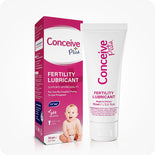
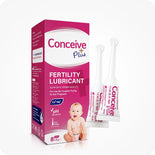
When you have identified your fertile window and are timing intercourse accordingly, using a fertility-friendly lubricant can further support your conception efforts. Conceive Plus is formulated to mimic the ionic composition of natural cervical mucus, providing calcium and magnesium ions that support sperm motility and function.
Unlike conventional lubricants that can harm sperm, fertility-friendly lubricants create an environment that supports sperm survival and transport. This is particularly important during the fertile window, when you want to give sperm every possible advantage in reaching and fertilising the egg. Using a fertility-friendly lubricant is a simple, low-cost addition to your fertility toolkit that can make a meaningful difference.
Frequently Asked Questions
How do I know if I am ovulating?
Symptoms of ovulation include egg white cervical mucus, mild cramping on one side (mittelschmerz), a slight rise in basal body temperature, increased libido, and breast tenderness. OPKs and BBT charting provide more objective confirmation.
Can I ovulate without having a period?
It is possible but uncommon. Some women may ovulate before their first postpartum period, and women with very light bleeding may mistake breakthrough bleeding for a period.
How long does ovulation last?
Ovulation itself is the release of an egg, which takes only a few minutes. The egg remains viable for 12 to 24 hours after release.
Can I get pregnant if I have sex before ovulation?
Yes. Sperm can survive in the female reproductive tract for up to five days, so intercourse in the days leading up to ovulation can result in pregnancy.
Do I need to have sex every day during ovulation?
Every other day is generally sufficient to ensure sperm are present during the fertile window. Daily intercourse is not harmful but can be exhausting for some couples.
What if my cycles are very irregular?
Irregular cycles make ovulation tracking more challenging but not impossible. Combining BBT charting, cervical mucus monitoring, and OPKs can help identify patterns over time.
Can stress delay ovulation?
Yes. Emotional and physical stress can delay or suppress ovulation by affecting the hypothalamic-pituitary-ovarian axis. Managing stress is an important part of fertility.
At what age does ovulation become irregular?
Ovulation typically becomes less regular after age 35, and cycles may shorten or lengthen. Perimenopause (the transition to menopause) often involves more irregular ovulation.
Do birth control pills affect ovulation permanently?
No. Ovulation typically resumes within a few weeks to months after stopping birth control pills, though it may take some cycles for regular ovulation to establish.
How accurate are fertility tracking apps?
Apps that use only calendar data are about 20 percent accurate for predicting fertile windows. Apps that incorporate BBT, cervical mucus, and OPK data are significantly more reliable.