
PCOS and Fertility: A Complete Guide to Conceiving With Polycystic Ovary Syndrome
PCOS and Fertility: A Complete Guide to Conceiving With Polycystic Ovary Syndrome
Polycystic ovary syndrome (PCOS) is the most common hormonal disorder affecting women of reproductive age, estimated to affect 8–13% of women globally — and as many as 20% in South Asia. It is also the leading cause of anovulatory infertility, meaning infertility caused by failure to ovulate. Yet PCOS is not a sentence: with the right management approach, the vast majority of women with PCOS can and do conceive, both naturally and with fertility treatment.
This guide covers the science of PCOS, how it affects fertility, and the comprehensive approach — medical, nutritional, lifestyle, and supplement-based — that gives women with PCOS the best chance of successful conception.
Understanding PCOS: The Hormone Imbalance Behind the Condition
PCOS is diagnosed using the Rotterdam Criteria, which requires 2 of the following 3 features:
- Oligo- or anovulation (irregular or absent periods)
- Clinical or biochemical signs of excess androgens (elevated testosterone, DHEA-S, or clinical features like acne and hirsutism)
- Polycystic ovaries on ultrasound (≥20 follicles per ovary, or ovarian volume >10ml)
The core hormonal disturbance in most PCOS is insulin resistance. Elevated insulin stimulates the ovaries to produce excess androgens (testosterone, androstenedione). High androgens disrupt normal follicle development, preventing the LH surge needed for ovulation. The result: multiple small follicles that never reach maturity (the "string of pearls" appearance on ultrasound) and irregular or absent cycles.
How PCOS Affects Fertility
Ready to support your fertility journey? Shop Conceive Plus →
The primary fertility challenge in PCOS is anovulation — failure to ovulate in a given cycle. While women with PCOS typically have a normal or even higher-than-average egg reserve (more small follicles), those follicles often fail to complete development and release an egg.
Additional challenges may include:
- Endometrial dysfunction: Chronic anovulation alters uterine lining receptivity
- Higher miscarriage rates: Possibly related to endometrial issues and elevated LH at conception
- Elevated androgens: Reduce egg quality even when ovulation does occur
- Impaired ovulation prediction: OPKs may give false positives due to chronically elevated LH
The critical insight: PCOS does not damage eggs or reduce egg reserve. It disrupts the hormonal signalling that allows eggs to mature and be released. Addressing that hormonal environment — primarily insulin resistance — is the most powerful lever available.
Lifestyle and Weight Management: The Most Powerful PCOS Fertility Intervention
For women with PCOS who are overweight, even modest weight loss (5–10% of body weight) can restore ovulatory cycles, often without any medical intervention. A 2016 study in Human Reproduction found lifestyle intervention resulted in pregnancy rates equivalent to clomiphene citrate (the standard first-line ovulation induction medication) in overweight women with PCOS.
Key lifestyle pillars:
- Low-glycaemic index diet: Reduces insulin spikes; replaces refined carbs with whole grains, legumes, and vegetables
- Regular moderate exercise: Improves insulin sensitivity; 150 minutes/week of moderate activity
- Resistance training: Particularly effective for improving insulin sensitivity and reducing androgens
- Reducing ultra-processed foods: High sugar and trans fat intake worsens insulin resistance and androgen excess
- Sleep hygiene: Poor sleep worsens insulin resistance; aim for 7–9 hours
Supplements With Strong Evidence for PCOS Fertility
Myo-Inositol
Myo-inositol is the most evidence-based supplement for PCOS fertility. It is a naturally occurring compound that acts as an insulin sensitiser and is involved in FSH signalling within follicles. Multiple RCTs show that myo-inositol (4g/day) improves ovulation rates, menstrual regularity, egg quality, and clinical pregnancy rates in women with PCOS. It is available over the counter and has an excellent safety profile. Many fertility specialists now recommend it as a first-line supplement alongside or instead of metformin for insulin-resistant PCOS.
D-Chiro-Inositol
D-chiro-inositol (DCI) works synergistically with myo-inositol. The typical ratio used in research is 40:1 myo- to D-chiro-inositol (matching the physiological plasma ratio). DCI reduces androgens and improves insulin sensitivity, complementing myo-inositol's effects on ovarian follicle signalling.
Folate (Methylfolate)
Essential for all women TTC, methylfolate is the bioavailable form. Women with PCOS may have impaired folate metabolism due to associated MTHFR polymorphisms. Supplement 400–800mcg/day of methylfolate.
Vitamin D
Vitamin D deficiency is extremely common in PCOS — up to 70–85% of women with PCOS are deficient. Vitamin D receptors are expressed in the ovary and uterus, and supplementation improves menstrual regularity and insulin sensitivity in deficient women. Test and supplement to reach 75–100nmol/L.
N-Acetyl Cysteine (NAC)
NAC is a precursor to glutathione (a powerful antioxidant) and also has insulin-sensitising properties. Clinical trials show NAC improves ovulation rates and pregnancy rates in PCOS women who don't respond to clomiphene. It may also reduce testosterone levels. Typical dose: 1.8–3g/day.
Medical Treatments for PCOS-Related Infertility
First-Line: Letrozole
Letrozole (an aromatase inhibitor) has replaced clomiphene citrate as the first-line ovulation induction agent for PCOS in most international guidelines, following a landmark 2014 NEJM study showing significantly higher live birth rates (27.5% vs 19.1% per cycle). It causes fewer multiple pregnancies and is better tolerated.
Second-Line: Gonadotropins or Ovarian Drilling
If letrozole fails (typically after 3–6 cycles), injectable FSH (gonadotropins) can induce ovulation with careful monitoring to avoid ovarian hyperstimulation syndrome (OHSS) — a risk particularly elevated in PCOS. Laparoscopic ovarian drilling (LOD) is a surgical option that destroys androgen-producing ovarian tissue and can restore regular ovulation in up to 80% of cases.
IVF for PCOS
IVF is typically third-line for PCOS. It's highly effective — women with PCOS often have excellent egg numbers — but carries a higher OHSS risk. Freeze-all protocols (freezing all embryos rather than fresh transfer) followed by frozen embryo transfer (FET) significantly reduce OHSS risk and have become standard for PCOS IVF cycles.
Tracking Ovulation With PCOS
Standard OPKs are unreliable in PCOS because chronically elevated LH produces false positives. Better approaches for PCOS:
- Clearblue Advanced OPK: Uses both oestrogen and LH — more reliable for PCOS
- BBT charting: Confirms ovulation after the fact; useful combined with other methods
- Day 21 progesterone test: Confirms whether ovulation occurred in any given cycle
- Ultrasound monitoring: Gold standard — tracks follicle growth and confirms ovulation
Using Conceive Plus With PCOS
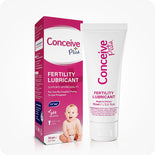
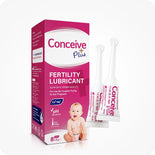
Many women with PCOS have reduced natural cervical mucus due to hormonal disruption. Conceive Plus provides a sperm-friendly lubricant that compensates for this — pH-balanced, iso-osmotic, and enriched with calcium and magnesium ions to support sperm survival and capacitation. It's safe to use alongside all PCOS medications including metformin, letrozole, and gonadotropins.
Frequently Asked Questions: PCOS and Fertility
Q: Can I get pregnant naturally with PCOS?
A: Yes. Many women with PCOS do ovulate irregularly — meaning they can conceive naturally, it just may take longer. Lifestyle interventions, supplements, and careful ovulation tracking can significantly increase the chances of natural conception.
Q: How long does it typically take to conceive with PCOS?
A: This varies enormously based on the severity of the condition, age, and whether medical support is used. Women with PCOS who do ovulate may conceive naturally within 6–12 months. Those with anovulatory PCOS often need medical ovulation induction. With appropriate treatment, the majority of women with PCOS achieve pregnancy.
Q: Does PCOS cause miscarriage?
A: Women with PCOS have a somewhat elevated miscarriage risk — estimated 30–50% higher than the general population. This may relate to elevated LH at the time of conception, insulin resistance affecting endometrial quality, or androgen excess. Managing insulin resistance before conception may reduce this risk.
Q: Is metformin safe in pregnancy?
A: Metformin has been used in pregnancy for decades, particularly for PCOS and gestational diabetes, and is generally considered safe. However, most guidelines recommend transitioning to folate supplementation and lifestyle management once pregnant, unless there are specific indications. Follow your doctor's guidance.
Q: Does the PCOS go away after pregnancy?
A: No. PCOS is a lifelong condition. After delivery, women with PCOS remain at elevated risk for type 2 diabetes, metabolic syndrome, and cardiovascular disease. Continued lifestyle management is important throughout life.
Q: How much weight loss is needed to restore ovulation in PCOS?
A: Studies consistently show that 5–10% of body weight loss is sufficient to restore ovulation in many women with overweight PCOS. This is very achievable and should be a primary intervention before medication in eligible women.
Q: Can thin women have PCOS?
A: Yes. Approximately 15–20% of women with PCOS are normal weight or underweight (lean PCOS). These women still have hormonal imbalance and androgen excess but may have less prominent insulin resistance. They still respond to inositol, dietary management, and medical ovulation induction.
Q: Are OPK tests reliable for women with PCOS?
A: Standard OPKs (LH-only) are unreliable for PCOS because baseline LH is often elevated, creating false positives. Use progesterone testing, BBT charting, or digital OPKs that measure oestrogen and LH together. Ultrasound monitoring is the gold standard if available.
Support your fertility journey with Conceive Plus. Explore the full range →