
Age and Fertility: How Getting Older Affects Your Chances of Getting Pregnant — and What You Can Do
Age and Fertility: How Getting Older Affects Your Chances of Getting Pregnant — and What You Can Do
Few topics in reproductive medicine carry more weight — or more anxiety — than age and fertility. Whether you're in your early thirties weighing your options, in your late thirties trying to conceive, or over forty navigating a complex fertility journey, understanding the evidence-based reality of how age affects fertility empowers you to make informed decisions without panic.
This comprehensive guide explains exactly what happens to fertility as we age, what the statistics really mean (and what they don't), and what actionable steps — from lifestyle changes to medical interventions — can make the biggest difference.
How Age Affects Female Fertility: The Science
Female fertility is directly tied to ovarian reserve — the quantity and quality of eggs remaining in the ovaries. Unlike men, who produce new sperm continuously throughout their lives, women are born with all the eggs they will ever have (approximately 1–2 million at birth). By puberty, this has declined to around 300,000–500,000. Of these, only approximately 300–500 will be ovulated during a woman's reproductive lifetime.
The decline in fertility with age is driven by two parallel processes:
- Quantitative decline: The number of remaining eggs decreases accelerating after age 35, when the rate of egg loss increases significantly.
- Qualitative decline: Egg quality — specifically, chromosomal integrity — deteriorates with age. At 25, approximately 20–25% of eggs are chromosomally abnormal (aneuploid). By 40, this rises to 50–60%, and by 43–44, over 80% of eggs may be chromosomally abnormal. These aneuploid eggs result in failed fertilisation, failed implantation, or miscarriage.
Fertility Rates by Age: What the Numbers Actually Say
Understanding what declining fertility statistics actually mean in practice helps cut through the fear:
- Under 30: Approximately 85% of couples conceive within 12 months; per-cycle probability approximately 20–25%
- 30–34: Approximately 78–80% conceive within 12 months; per-cycle probability approximately 15–20%
- 35–37: Approximately 65–70% conceive within 12 months; per-cycle probability approximately 10–15%
- 38–40: Approximately 50–60% conceive within 12 months; per-cycle probability approximately 8–12%
- 41–42: Approximately 35–40% conceive within 12 months; per-cycle probability approximately 5–8%
- 43+: Approximately 20–25% conceive within 12 months with own eggs; per-cycle probability drops below 5%
What these statistics don't tell you: They represent population-level averages. Individual fertility within each age bracket varies enormously based on ovarian reserve, overall health, partner's sperm quality, and underlying conditions. A 38-year-old with high AMH and a healthy lifestyle may have fertility equivalent to a typical 33-year-old. Age is a powerful predictor at the population level, but it is not your destiny at the individual level.
The Male Age Factor: Often Overlooked
Fertility discussions focus predominantly on women's age, but male age also matters — and is frequently underestimated:
- Sperm volume and motility decline gradually from the late 30s
- Sperm DNA fragmentation increases with age — a 45-year-old man has approximately twice the sperm DNA damage of a 25-year-old
- Children of older fathers have higher rates of certain conditions including autism, schizophrenia, and some cancers — associated with de novo genetic mutations in sperm
- Time-to-pregnancy is longer with an older male partner, even when the woman is young
A 2019 study in the American Journal of Obstetrics and Gynecology found that a male partner over 40 (with a female partner under 30) increased miscarriage risk by 60% compared to couples where both partners were under 35.
Testing Your Fertility: Knowing Where You Stand
If you're over 35 and thinking about having children (whether now or in the next few years), certain tests give you meaningful information:
For Women
- AMH (Anti-Müllerian Hormone): The most clinically useful marker of ovarian reserve. A high AMH indicates more eggs remaining; low AMH suggests diminished reserve. AMH can be tested at any point in your cycle.
- AFC (Antral Follicle Count): A transvaginal ultrasound count of small follicles. Combined with AMH, it gives the clearest picture of remaining egg supply.
- Day 3 FSH: Elevated FSH (above 10 IU/L) suggests the pituitary is working harder to stimulate the ovaries — a sign of reduced reserve.
Important caveat: AMH and AFC measure quantity, not quality. Normal AMH does not guarantee chromosomally normal eggs — egg quality declines with age regardless of reserve levels. Two women with the same AMH at 28 and 42 will have very different egg quality profiles.
For Men
- Semen analysis: Baseline count, motility, morphology, and volume
- Sperm DNA fragmentation: Particularly relevant for men over 40; high fragmentation is associated with reduced fertilisation rates and higher miscarriage risk
What You Can Do to Optimise Fertility at Any Age
While we cannot reverse biological ageing, we can meaningfully influence fertility by optimising the factors we can control:
Nutrition for Egg Quality
A Mediterranean-style diet — rich in antioxidants, healthy fats, folate, and lean protein — is associated with better egg quality and fertility outcomes at every age. Key nutrients:
- CoQ10 (ubiquinol): The single most evidence-backed supplement for egg quality in older women. Mitochondria in eggs need CoQ10 to generate the energy required for proper chromosomal segregation during meiosis. Dosage: 300–600 mg/day of the ubiquinol form.
- Methylfolate: Active folate bypasses the MTHFR enzyme limitation. Critical for neural tube formation and chromosomal integrity.
- Vitamin D3: Low vitamin D is associated with poorer IVF outcomes and lower AMH. Supplement to achieve 40–60 ng/mL blood levels.
- Antioxidants: Vitamins C and E, selenium, resveratrol — reduce oxidative stress to aging eggs.
- Omega-3 fatty acids: Support cell membrane integrity in eggs and early embryos.
Explore Conceive Plus Fertility Supplements — Science-Backed for Women Over 35 →
Lifestyle Optimisation
- Quit smoking: Smoking is directly toxic to eggs and significantly accelerates ovarian ageing. Women who smoke have an AMH equivalent to someone 3–5 years older than their chronological age.
- Reduce alcohol: Even 2 drinks per day has been shown to reduce fertility and increase miscarriage risk.
- Maintain healthy BMI: Both overweight and underweight states impair ovarian function and egg quality.
- Manage stress: Chronic HPA axis activation from stress elevates cortisol and disrupts reproductive hormones. Mind-body practices (yoga, mindfulness, CBT) have demonstrated measurable improvements in fertility outcomes.
- Sleep: Melatonin — produced during deep sleep — acts as a powerful antioxidant in follicular fluid, protecting eggs from oxidative damage. Protect 7–8 hours of quality sleep.
Timing and Tracking
For women over 35, time is a more precious resource. Don't delay fertility evaluation if you haven't conceived within 6 months of regular timed intercourse. Every cycle counts more when there are fewer of them ahead.
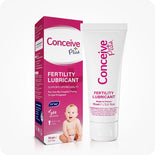
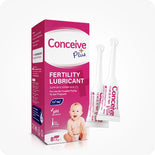
Use a combination of OPKs, cervical mucus observation, and possibly BBT charting to identify your fertile window precisely. If cervical mucus is insufficient (common with age), use Conceive Plus fertility lubricant to compensate — its ionic formula mimics fertile cervical mucus and supports sperm function.
Shop Conceive Plus Fertility Lubricant in India →
Medical Options for Older Fertility Patients
When natural conception isn't occurring, fertility treatment options for older women include:
IVF with Preimplantation Genetic Testing (PGT-A)
For women over 37 (and especially over 40), PGT-A allows chromosomally normal embryos to be selected before transfer, significantly improving implantation rates per transfer and reducing miscarriage rates. While fewer embryos may be normal, transferring a confirmed euploid blastocyst at 40 can achieve live birth rates of 40–50% per transfer in otherwise healthy patients.
Egg Freezing
Social egg freezing (vitrification) allows women to preserve eggs from their current age for future use. The quality at freeze is the quality retained at thaw — eggs frozen at 33 function as 33-year-old eggs even when used at 38. Success rates per thawed egg improve significantly with each egg retrieved: freezing 15–20 eggs provides a meaningful number of attempts.
Donor Eggs
For women with significantly diminished reserve or repeated IVF failures, donor egg IVF offers the highest success rates — typically 50–60% per transfer regardless of recipient age, because egg quality is determined by the donor's age. This is an increasingly common and accepted path to parenthood.
Lifestyle Medicine Protocols
Increasingly, reproductive endocrinologists integrate intensive lifestyle and supplement protocols (CoQ10, DHEA where appropriate, antioxidants, dietary overhaul) before an IVF cycle in older patients to maximise the quality of the eggs retrieved.
A Word on Miscarriage and Age
Miscarriage is one of the most painful aspects of fertility challenges, and it becomes more common with age. The statistics:
- Under 30: approximately 10% miscarriage rate
- 35–39: approximately 20%
- 40–44: approximately 40%
- Over 45: approximately 50–80%
The majority of these miscarriages are caused by chromosomal abnormalities in the embryo — this is why PGT-A testing before transfer can dramatically reduce miscarriage rates. A miscarriage, though heartbreaking, is usually not a sign that your body "can't carry a pregnancy" — it is most often the body's natural response to a non-viable embryo.
Frequently Asked Questions: Age and Fertility
Q: At what age does female fertility decline significantly?
A: There is a gradual decline from the late 20s, a more noticeable drop after 35, and a more marked decline after 38–40. There is no cliff edge — it is a continuum. However, 35 is the clinical threshold where more proactive management is typically recommended.
Q: I'm 38 and just started trying. How urgent is this?
A: Don't panic, but don't wait too long either. ACOG (American College of Obstetricians and Gynecologists) recommends seeking a fertility evaluation after 6 months of trying for women over 35. This doesn't mean you need treatment — it means getting a full picture of your fertility status.
Q: Can CoQ10 really improve egg quality?
A: Multiple randomised controlled trials support CoQ10 supplementation for improving ovarian response and egg quality in older women undergoing IVF. The largest systematic review (2020) found significant improvement in the number of retrieved eggs, mature oocytes, and fertilisation rate with CoQ10 supplementation. It's not magic, but it is one of the most evidence-supported interventions available.
Q: My AMH is low for my age. Does this mean I can't conceive naturally?
A: Not necessarily. Low AMH predicts a poorer response to ovarian stimulation in IVF, but its ability to predict natural fertility is less clear. Women with low AMH have conceived naturally. It does suggest you should seek evaluation sooner rather than later, as reserve will continue to decline.
Q: Does DHEA help with diminished ovarian reserve?
A: DHEA (dehydroepiandrosterone) has shown promising results in some trials for improving ovarian response in women with DOR, particularly at doses of 75 mg/day for 3–6 months before IVF. However, it should only be taken under specialist supervision, as excess androgens can cause side effects and may worsen conditions like PCOS.
Q: Can I conceive at 45 with my own eggs?
A: It is possible but statistically uncommon. Live birth rates with own eggs at 45+ are below 5% per IVF cycle. Many women in this age group successfully conceive with donor eggs, which carry success rates of 50–60% per transfer regardless of recipient age.
Q: Does my partner's age affect our chances?
A: Yes. Male fertility also declines with age, and sperm DNA fragmentation increases significantly after 40. For older male partners, lifestyle optimisation (antioxidants, reduced alcohol, heat avoidance) and potentially sperm DNA fragmentation testing are worthwhile.
Q: Should I freeze my eggs if I'm 32 and not ready to conceive?
A: The data suggests that the most cost-effective age for social egg freezing is 32–36, when egg quantity is reasonable and quality is still relatively high. After 38, success rates per thawed egg decline significantly. If you're considering this, consult a reproductive endocrinologist for an individualised assessment based on your AMH and AFC.
Q: What is the oldest age someone has conceived with their own eggs?
A: Spontaneous natural conception has been documented into the mid-50s, though it is exceptionally rare after 45. The record for IVF with own eggs is limited by extremely low success rates — most clinics will not offer stimulation cycles beyond 43–44 due to very low likelihood of obtaining euploid embryos.
Q: Is it worth getting fertility testing even if I'm not ready to try?
A: Knowing your AMH and AFC gives you valuable information for future planning. Low reserve at 32 may motivate egg freezing earlier; high reserve at 38 may provide reassurance. Testing doesn't commit you to any course of action — it informs your decisions.
Moving Forward: Knowledge Is Power
Age is a factor in fertility — but it is one factor among many, and it is not a verdict. The most important steps you can take, at any age, are:
- Get tested — know your ovarian reserve and your partner's sperm quality
- Don't wait longer than necessary — seek evaluation at the 6-month mark if over 35
- Optimise what you can control — diet, supplementation, sleep, stress, lifestyle
- Work with a reproductive endocrinologist who can personalise your approach
- Use tools like Conceive Plus lubricant and fertility supplements to support every cycle
Your path to parenthood is uniquely yours. Understanding the science of age and fertility means you can navigate it with clarity, not fear.