
Timing Intercourse for Conception: A Complete Guide to Identifying Your Fertile Window
Why Timing Matters More Than You Think
Unlike many fertility factors that require medical intervention or months of lifestyle changes, timing intercourse is something every couple can optimise immediately. And the impact is substantial. A 2023 study published in Human Reproduction found that couples who timed intercourse to the fertile window had a 31 percent pregnancy rate per cycle compared to just 8 percent for couples having regular but untimed intercourse.
The fertile window is typically six days long — the five days before ovulation plus the day of ovulation itself. This is because sperm can survive in the female reproductive tract for up to five days, while the egg survives for only 12 to 24 hours after ovulation. Having sperm waiting when the egg is released maximises the chance of fertilisation.
Understanding Your Menstrual Cycle
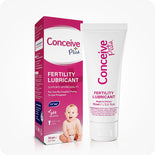
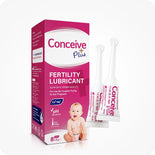
Support your fertility journey today. Discover Conceive Plus Fertility Lubricant — science-backed and designed to help you conceive.
The menstrual cycle is divided into two phases separated by ovulation. The follicular phase begins on the first day of your period and ends with ovulation. This phase varies in length between women and even cycle to cycle. The luteal phase begins after ovulation and lasts approximately 12 to 16 days. This phase is relatively consistent in length for each woman.
The key insight is that since the luteal phase is relatively fixed, the variation in cycle length is almost entirely due to variation in when ovulation occurs. This is why calendar-based methods alone are unreliable for women with irregular cycles.
Methods to Identify Your Fertile Window
Ovulation predictor kits (OPKs): These detect the LH surge that occurs 24 to 36 hours before ovulation. They are highly reliable and one of the most practical tools. Start testing several days before your expected ovulation and test once daily, preferably in the afternoon.
Cervical mucus tracking: Rising oestrogen causes cervical mucus to become clear, slippery, and stretchy — resembling raw egg white. This fertile-quality mucus indicates that ovulation is approaching. When you see this mucus, it is time to start having intercourse.
Basal body temperature (BBT): Your temperature rises 0.2 to 0.5 degrees Celsius after ovulation due to increased progesterone. BBT confirms that ovulation has occurred but cannot predict it. It is most useful when combined with OPKs or cervical mucus tracking.
Fertility monitors: Devices like the Mira or Clearblue Fertility Monitor track multiple hormones to identify the fertile window more precisely.
Optimal Intercourse Frequency
Having intercourse every one to two days during the fertile window is optimal. Daily intercourse provides no additional benefit and may become stressful. Sperm quality is best with 24 to 48 hours between ejaculations, so every other day is ideal.
Creating the Right Conditions
Using a fertility-friendly lubricant matters enormously. Standard lubricants can reduce sperm motility by 60 to 100 percent. A fertility-friendly lubricant like Conceive Plus is formulated to support sperm survival, ensuring that when you time intercourse correctly, the sperm are not compromised by the environment.
What If You Have Irregular Cycles?
Irregular cycles make timing more challenging but not impossible. Start using OPKs earlier in your cycle — around day 7 or 8. Consider using a fertility monitor that tracks oestrogen as well as LH. If your cycles are consistently irregular (more than 35 days or consistently varying by more than 7 days), consult your doctor.
Frequently Asked Questions
Q: When is the best time of day for intercourse?
A: There is no evidence that time of day affects conception rates. Morning, afternoon, or evening are equally effective.
Q: Can I ovulate more than once per cycle?
A: True multiple ovulations are rare. However, you can have multiple fertile days.
Q: How do I know if I am ovulating?
A: OPKs, cervical mucus tracking, and BBT are the best home methods.
Q: Can stress delay ovulation?
A: Yes. Stress can temporarily delay or even suppress ovulation.
Q: Is it possible to ovulate without a period?
A: Yes, though uncommon. Some women ovulate before their first postpartum period.
Q: Do fertility apps work for timing?
A: They can help but are less accurate than OPKs or mucus tracking.
Q: Does lubricant affect timing success?
A: Standard lubricants can sabotage well-timed intercourse. Use a fertility-friendly lubricant.
Your fertility journey deserves the best support. Shop Conceive Plus Fertility Lubricant now — clinically tested, fertility-friendly, and trusted by thousands of couples worldwide.