
Best Time to Have Sex to Get Pregnant: Timing Intercourse for Maximum Fertility
Best Time to Have Sex to Get Pregnant: Timing Intercourse for Maximum Fertility
One of the most empowering discoveries for couples trying to conceive is understanding exactly when in the menstrual cycle conception can occur — and optimising their timing accordingly. The science of fertile window timing is clear, well-established, and actionable. Whether you're just starting your TTC journey or have been trying for months without success, correctly timing intercourse is one of the highest-leverage changes you can make. This guide covers everything you need to know about the best time to have sex to get pregnant, backed by reproductive biology and clinical research.
The Fertile Window: Understanding the Biology
Female fertility in any given cycle is concentrated in a window of approximately 5–6 days. This is not a cultural estimate — it's determined by the biology of eggs and sperm:
- The egg (oocyte) survives for only 12–24 hours after ovulation. If not fertilised in this window, it disintegrates.
- Sperm can survive in the female reproductive tract for up to 5 days in the presence of fertile cervical mucus — the egg-white-like discharge that appears around ovulation.
This means that conception can only occur if live sperm are present in the fallopian tube when the egg arrives — which requires either intercourse at the moment of ovulation, or sperm already waiting in the reproductive tract from intercourse in the days before.
A landmark study from the National Institute of Environmental Health Sciences tracked 221 healthy women and recorded exactly which days of their cycle resulted in conception. The findings were striking: conception occurred only when intercourse happened on one of the 6 days ending on the day of ovulation. The probability by day:
- 5 days before ovulation: approximately 10%
- 4 days before ovulation: approximately 16%
- 3 days before ovulation: approximately 14%
- 2 days before ovulation: approximately 27%
- 1 day before ovulation: approximately 31%
- Day of ovulation: approximately 33%
- Day after ovulation: approximately 0% (egg no longer viable)
The single most important finding: intercourse must occur within this 6-day window. Outside of it, conception is not possible regardless of frequency.
Identifying Ovulation: The Critical First Step
Ready to boost your fertility journey? Explore Conceive Plus — trusted by thousands of couples worldwide.
The major challenge with fertile window timing is that ovulation doesn't happen at the same time every cycle for most women. Even women with "regular" 28-day cycles can ovulate anywhere from day 11 to day 16. For this reason, predicting ovulation based on cycle length alone is not reliable — active detection is necessary.
Ovulation Predictor Kits (OPKs)
OPKs detect the luteinising hormone (LH) surge that triggers ovulation approximately 24–36 hours before it occurs. A positive OPK means ovulation is imminent — the most fertile days are the day of the positive result and the following day. OPKs are the most practical and accessible ovulation detection method for most couples.
Tips for accurate OPK use in India:
- Test in early afternoon (noon to 2 PM) when LH concentration in urine peaks
- Reduce fluid intake for 2 hours before testing
- Begin testing from day 9–10 of your cycle (or earlier for shorter cycles)
- Test twice daily during the likely surge period to avoid missing a brief LH peak
- For women with PCOS: LH may be chronically elevated — digital OPKs that detect the rise relative to baseline are more reliable
Cervical Mucus Monitoring
Cervical mucus changes predictably throughout the cycle. In the days approaching ovulation, oestrogen stimulates the cervix to produce clear, slippery, stretchy mucus — often described as resembling raw egg white. This egg white cervical mucus (EWCM) is the physical sign that the fertile window is open. It serves two biological purposes: providing a medium through which sperm can swim, and filtering out abnormal sperm.
When you notice EWCM, you're at or near peak fertility. Intercourse on days when EWCM is present maximises the chance of live sperm meeting the egg.
Basal Body Temperature (BBT)
A small but detectable rise in waking temperature (0.2–0.5°C) confirms that ovulation occurred — driven by the thermogenic effect of progesterone. BBT charting is most useful for confirming ovulation happened and for predicting future cycles based on historical data. It does not provide advance notice of ovulation in real time.
Optimal Intercourse Timing: What the Research Says
Given the fertile window data above, the question is: what intercourse frequency and timing strategy gives the highest pregnancy probability?
Strategy 1: Every Other Day During the Fertile Window
Having intercourse every 2 days from day 10 (in a 28-day cycle) through 1 day after ovulation confirmation ensures sperm are consistently present throughout the fertile window without over-diluting semen quality. This is the strategy most consistently recommended by reproductive endocrinologists.
This means approximately 3–4 intercourse sessions per fertile window — covering day 10, 12, 14 (and 15 if you've confirmed ovulation on day 14). Sperm survives 2–5 days, so every-other-day coverage is statistically equivalent to daily in terms of conception probability.
Strategy 2: Peak Days Focus
If every-other-day intercourse is impractical (travel, work schedules), focusing on the 2 highest-probability days — the day before ovulation and the day of ovulation — captures the statistical peak. A positive OPK is your signal to act in the next 24 hours and again 24 hours later.
Strategy 3: Advance Positioning
Some couples prefer to have intercourse 2–3 days before expected ovulation (based on previous cycle patterns or early OPK testing) to place sperm in the fallopian tube before the egg arrives. This is particularly useful for women with short fertile windows or who find that they ovulate early in their cycle.
How Often to Have Intercourse: Debunking the "Save It Up" Myth
Many couples believe that abstaining for several days before the fertile window will "save up" sperm for a more potent deposit at peak time. The reality is more nuanced:
- Optimal abstinence period: 2–5 days before intercourse. This maximises total count while maintaining motility and DNA integrity.
- Abstinence beyond 5 days: Sperm begins to age in the epididymis. DNA fragmentation increases, and motility declines. Very long abstinence (7+ days) actually produces a higher-volume but lower-quality sample.
- Daily intercourse: Produces lower volume (less sperm per deposit) but maintains DNA integrity well. Fine for fertile window coverage.
The evidence: a 2004 Fertility and Sterility study found that 1-day abstinence produced the highest total motile sperm count with the lowest DNA fragmentation. Couples wanting to optimise quality can time intercourse with 1–2 days of abstinence beforehand during the peak days.
The Role of Lubricant: A Critical Factor Often Overlooked
Many couples use lubricant during intercourse — which is entirely normal, as vaginal dryness is common and doesn't indicate any health issue. However, most standard lubricants are devastating to sperm:
- A 2014 Fertility and Sterility study tested 9 commercially available lubricants against fertile-quality cervical mucus. All reduced sperm motility significantly within 30–60 minutes of exposure. Some reduced motility by over 90%.
- Lubricants that are "water-based" or "natural" are not necessarily sperm-safe — it's pH, osmolality, and ingredient profile that matter, not the marketing label.
- Even saliva — often used spontaneously — is toxic to sperm due to its low pH and osmolality mismatch.
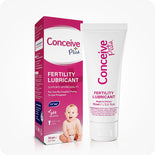
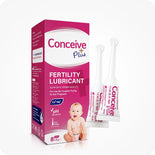
The solution: Conceive Plus fertility lubricant is specifically formulated to match the pH and osmolality of fertile cervical mucus. Unlike standard lubricants, it creates a medium in which sperm can survive, swim, and reach the egg. It also contains calcium and magnesium ions that support the sperm acrosome reaction — the biochemical event that allows a sperm to penetrate and fertilise the egg.
Conceive Plus is the only fertility lubricant that provides this ionic support alongside sperm-safe pH matching. For couples trying to conceive who use any lubricant at all, switching to Conceive Plus is a non-negotiable step.
Don't let your lubricant work against you: Conceive Plus fertility lubricant is pH-balanced, osmolality-matched, and enriched with calcium and magnesium ions — supporting sperm survival and function during your fertile window. Available now in India.
Post-Intercourse: What to Do (and Not Do)
The Lying Down Myth
One of the most persistent fertility myths is that lying down with elevated hips for 15–30 minutes after intercourse improves conception chances. The evidence does not support this for natural conception. Sperm that will reach the fallopian tube do so within minutes of ejaculation — the rapid swimmers are already at the cervix before you've had a chance to move. Lying still does not meaningfully affect which sperm succeed.
The one context where it may be relevant: intrauterine insemination (IUI), where guidelines sometimes recommend brief rest post-procedure. For natural intercourse, it's unnecessary.
Avoid Douching
Vaginal douching is associated with disrupted vaginal microbiome, reduced cervical mucus quality, and increased infection risk — all of which reduce fertility. Avoid douching entirely, especially during the TTC period.
Avoid Standard Lubricants After Intercourse
If you use lubricant or want to address dryness after intercourse, use only Conceive Plus or a similar sperm-safe product during the fertile window.
How Many Cycles Should It Take? Setting Realistic Expectations
Even with perfect timing and no fertility issues, the per-cycle conception probability for a healthy couple under 35 is approximately 20–25%. This means that even doing everything right, most couples don't conceive in cycle 1. The cumulative probability over 12 cycles of well-timed intercourse is approximately 85–90%.
What this means practically:
- Not conceiving in the first 3 months is completely normal and expected
- After 6 months of timed intercourse without success, couples with a female partner over 35 should consider fertility evaluation
- After 12 months without success for under-35 couples, medical evaluation is recommended
- Earlier evaluation is warranted if either partner has known fertility risk factors (irregular cycles, previous STIs, history of reproductive surgery, etc.)
Additional Factors That Improve Per-Cycle Probability
Beyond timing, several evidence-based factors increase the per-cycle conception probability:
- Healthy weight: Both obesity and being significantly underweight are associated with reduced fertility. BMI between 18.5 and 24.9 is associated with the highest conception rates.
- Male supplement use: Comprehensive antioxidant supplementation (CoQ10, zinc, selenium, L-carnitine) improves sperm quality metrics over 90 days
- Female supplement use: Methylfolate, CoQ10 (especially over 35), and vitamin D support egg quality and hormonal regularity
- Reducing alcohol and smoking: Both have dose-dependent negative effects on fertility in both sexes
- Stress management: Chronic stress disrupts the HPO axis and delays ovulation
- Adequate sleep: Sleep deprivation reduces testosterone and disrupts reproductive hormone rhythms
Frequently Asked Questions: Timing Intercourse for Conception
Q: Can I get pregnant just before my period?
A: It's very unlikely. The egg is typically long gone by the time your period is approaching (it survives only 12–24 hours post-ovulation). However, women with very short cycles or late-cycle surprises occasionally ovulate later than expected. If your cycle is irregular, relying on cycle length to determine "safe" days is not reliable.
Q: Does orgasm help conception?
A: There's an old "uterine suction" theory suggesting female orgasm assists sperm transport. Modern research hasn't confirmed this clinically, and conception occurs without orgasm routinely. That said, orgasm has no negative effect and clearly benefits the intimacy of intercourse — which matters during the often-stressful TTC period.
Q: If I have irregular cycles, how do I time intercourse?
A: Irregular cycles require active monitoring rather than prediction. OPKs (starting from day 8–9 of each cycle) and cervical mucus monitoring are the most reliable approaches. You may need to test for longer and may have cycles where ovulation doesn't occur (anovulatory cycles) — something to discuss with your gynaecologist if it's a pattern.
Q: Is it normal for my fertile window to vary between cycles?
A: Yes. Even women with regular cycle lengths can have ovulation timing vary by 2–5 days between cycles. Stress, illness, travel, and hormonal fluctuations all influence the timing of the LH surge. This is why active ovulation detection (OPKs and mucus monitoring) beats calendar calculation for most women.
Q: We've been having intercourse daily throughout the cycle. Why aren't we pregnant?
A: If conception isn't occurring despite frequent intercourse, the issue is unlikely to be timing alone. Consider: Is ovulation occurring? (Confirmed by OPK or BBT rise?) Are sperm parameters normal? (Consider a home sperm test.) Is the lubricant you're using sperm-safe? Is there a structural or hormonal issue? After 6–12 months of frequent, cycle-spanning intercourse without conception, a medical evaluation is appropriate.
Q: Does Conceive Plus lubricant help sperm reach the egg?
A: Conceive Plus creates a medium that doesn't harm sperm — unlike most lubricants, which are toxic to sperm. It provides a sperm-compatible environment during intercourse. It doesn't actively propel sperm but removes a significant barrier to their survival. The calcium and magnesium ions support the acrosome reaction, which is the mechanism sperm use to penetrate the egg membrane.
Q: What's the best sex position for getting pregnant?
A: There's no clinical evidence that any particular position meaningfully improves conception rates. The anatomy of sperm transport makes position largely irrelevant — rapid motile sperm reach the cervix within 90 seconds of ejaculation regardless of position. Focus on timing rather than position.
Q: Can I take a pregnancy test before my missed period?
A: Early-detection tests (like FRER) can detect hCG as early as 8–10 days post-ovulation. However, testing too early increases the risk of false negatives (the hCG level may not yet be detectable) and may detect a chemical pregnancy that would have passed unnoticed without testing. Most reliable results come from testing on the day of the expected period or later.
Q: Does the two-week wait affect my chance of implantation?
A: Nothing you do or don't do during the two-week wait (the luteal phase between ovulation and expected period) meaningfully affects implantation probability. Implantation occurs or doesn't based on embryo quality and endometrial receptivity established before you enter the TWW. Normal activity, moderate exercise, and a balanced diet are all fine. Avoid alcohol and maintain your supplement routine.
Conclusion: Timing Is Your Most Powerful Tool
Correctly timing intercourse around ovulation is the most direct and powerful way to improve your monthly conception probability. The fertile window is narrow but highly predictable with the right tracking tools — OPKs, cervical mucus monitoring, and BBT charting — and the pregnancy rates in couples who track and time carefully are substantially higher than those who rely on frequency alone.
Pair perfect timing with Conceive Plus fertility lubricant — so that when you do have intercourse during the fertile window, you're giving sperm the best possible environment for survival and function. Add Conceive Plus men's and women's fertility supplements to support the quality of the egg and sperm that come together in that crucial window. Timing, support, and quality: the three pillars of an effective conception strategy.
Ready to boost your fertility journey? Explore Conceive Plus — trusted by thousands of couples worldwide.