
Understanding Ovulation: Signs, Timing and How to Track Your Fertile Window
Understanding Ovulation: Signs, Timing and How to Track Your Fertile Window
Ovulation is the central event of the menstrual cycle — the moment when a mature egg is released from the ovary and becomes available for fertilisation. Understanding when ovulation occurs, recognising its signs, and accurately tracking your fertile window is the most important thing you can do to improve your chances of getting pregnant naturally.
Yet despite its importance, ovulation remains poorly understood by many people trying to conceive. Misconceptions about timing are widespread — particularly the belief that ovulation always occurs on day 14, that the fertile window is a single day, or that irregular cycles make ovulation impossible to predict. This guide corrects those misconceptions and gives you the practical tools to identify your own unique ovulation pattern.
What Is Ovulation and When Does It Happen?
Ovulation is triggered by a hormonal cascade that begins in the brain. The hypothalamus releases GnRH (gonadotrophin-releasing hormone), which signals the pituitary gland to release FSH (follicle-stimulating hormone). FSH stimulates several follicles in the ovary to grow and mature. As follicles develop, they produce increasing amounts of oestrogen.
When oestrogen reaches a threshold level, it triggers an LH (luteinising hormone) surge from the pituitary — a sharp, dramatic rise in LH that occurs over approximately 24–36 hours. This LH surge is the final trigger for ovulation: the dominant follicle ruptures and releases its mature egg (oocyte) into the fallopian tube. The egg is viable for approximately 12–24 hours post-release.
The common claim that ovulation always occurs on day 14 is a myth based on the idealized 28-day cycle. In reality:
- Cycle length varies significantly between women (21–35 days is considered normal)
- Even within the same woman, cycle length varies from month to month
- Ovulation typically occurs 12–16 days before the START of the next period — not 14 days after the start of the current period
- For women with longer cycles (e.g. 35 days), ovulation may occur around day 19–21
- For women with shorter cycles (e.g. 24 days), ovulation may occur as early as day 10
Tracking your individual ovulation pattern — rather than relying on calendar averages — is what actually works for conception.
The Fertile Window: More Than Just One Day
While the egg itself is viable for only 12–24 hours, the fertile window is significantly wider than many people realise. This is because sperm can survive in the female reproductive tract for up to 5 days (some studies suggest even longer in optimal cervical mucus conditions).
This means that intercourse up to 5 days before ovulation can still result in fertilisation — sperm can survive long enough to be waiting when the egg is released. The fertile window is therefore approximately 6 days long: the 5 days leading up to ovulation plus the day of ovulation itself.
Peak fertility is concentrated in the final 2–3 days of this window. The highest pregnancy rates per cycle occur from intercourse on the day before ovulation and the day of ovulation itself, with declining but still significant probability from intercourse in the 3–4 days prior.
Practical implication: couples trying to conceive should aim to have intercourse every 1–2 days during the fertile window rather than attempting to pinpoint one exact day. This covers the natural variability in ovulation timing and sperm survival.
Signs and Symptoms of Ovulation
Your body produces several observable signs that ovulation is approaching or occurring. Learning to recognise these signs is the foundation of natural fertility awareness:
Cervical Mucus Changes (Most Important Physical Sign)
Cervical mucus changes dramatically through the cycle under hormonal influence. As ovulation approaches, rising oestrogen causes mucus to become:
- Increasing in quantity
- Clearer in appearance (from white/creamy to clear)
- More stretchy — fertile-quality mucus (also called "egg-white cervical mucus" or EWCM) can be stretched between fingers into a long, thin thread without breaking
- More slippery and lubricative in sensation
Peak fertility is associated with the most abundant, clearest, and most stretchy cervical mucus. This mucus creates channels that guide sperm through the cervix and provides nutrients that extend sperm survival. After ovulation, progesterone causes mucus to become thick, opaque, and sticky again — forming a "mucus plug" that blocks sperm entry.
Tracking cervical mucus changes is one of the most reliable free ovulation signs available. The absence of fertile-quality mucus in some cycles (even when OPK shows an LH surge) may indicate that the cervical environment is suboptimal — another reason why fertility-safe lubricants like Conceive Plus, which mimic fertile mucus properties, can be valuable.
LH Surge (Detected by OPK)
The LH surge is the most reliable, measurable indicator of imminent ovulation. Ovulation predictor kits (OPKs) test urine for LH, with a positive result (test line as dark or darker than the control line) indicating the surge has begun. Ovulation typically follows within 24–36 hours of a positive OPK.
Testing time matters: LH is typically highest in urine in late morning to early afternoon (10am–2pm). Testing in this window, with moderate fluid intake (not over-diluted), gives the most reliable results. For women with PCOS or polycystic ovaries, baseline LH may be elevated, making OPK interpretation more challenging — digital tests with a "peak" indicator are more reliable.
Support your fertility journey with Conceive Plus. Shop Conceive Plus India — fertility-safe lubricant, ovulation support supplements, and prenatal vitamins for couples trying to conceive.
Basal Body Temperature (BBT)
Progesterone, produced by the corpus luteum after ovulation, raises core body temperature slightly (0.2–0.5°C). This temperature shift is measurable using a basal body thermometer — a highly sensitive digital thermometer measuring to 0.1°C — taken immediately upon waking, before any activity.
BBT tracking cannot predict ovulation (the temperature rise occurs after the egg has already been released) but can confirm that ovulation has occurred and help you identify your ovulation pattern over multiple cycles. After 2–3 cycles of consistent BBT tracking, most women can predict their approximate ovulation window based on their cycle pattern.
What to look for: a sustained rise in temperature (at least 0.2°C) that remains elevated for 3+ days. If this elevation persists beyond your normal luteal phase length (usually 10–16 days), it can be an early indicator of pregnancy before a positive test.
Mittelschmerz (Ovulation Pain)
Around 20% of women experience a brief, one-sided pelvic pain during ovulation — called Mittelschmerz (German for "middle pain"). It typically occurs on the side where ovulation is happening (ovaries alternate in most cases but not always) and lasts from a few minutes to a few hours. It's caused by follicle rupture and the small amount of fluid released into the pelvic cavity.
Mittelschmerz is a useful additional indicator of ovulation timing but is not present in all women and not in all cycles for those who do experience it.
Breast Sensitivity
Some women notice increased breast sensitivity around ovulation, related to the peak oestrogen surge. This is distinct from the broader breast tenderness of the luteal phase (post-ovulation), which is progesterone-driven and more sustained.
Libido Changes
Many women report a natural increase in sexual desire around ovulation — an evolutionary mechanism that increases the likelihood of conception at peak fertility. This is a useful biologically-informed signal to pay attention to.
How to Track Ovulation: The Complete Toolkit
The most effective ovulation tracking approaches combine multiple methods for a fuller, more reliable picture of fertility:
Method 1: Ovulation Predictor Kits (OPKs)
The standard starting point for most TTC couples. OPKs are reliable, objective, and straightforward to use. Best practices:
- Start testing from day 10 (or earlier if your cycle is shorter than 28 days)
- Test at the same time daily — late morning to early afternoon is ideal
- Moderate fluid intake 2–4 hours before testing
- Keep the same brand each cycle for consistent interpretation
- A positive result means begin having intercourse — don't wait to "confirm" with another test before acting
Method 2: Basal Body Temperature Charting
- Take temperature immediately upon waking, before getting up
- Use a basal body thermometer (0.1°C precision)
- Record the same time ± 30 minutes each day
- Log results on a chart or in a fertility app
- Identify the biphasic pattern (lower temperatures before ovulation, higher after)
Method 3: Cervical Mucus Monitoring
- Check mucus daily — at the same time, in a consistent way (wiping before urination gives most reliable results)
- Log consistency: dry, sticky, creamy, watery, egg-white
- Increase intercourse frequency when you notice a shift toward clearer, more stretchy mucus
Method 4: Fertility Apps
Apps like Clue, Flo, Natural Cycles, and Fertility Friend integrate OPK results, BBT data, and mucus observations to build a cycle model and provide predictions of your fertile window. After 2–3 cycles of data, predictions become significantly more accurate. Some apps offer certified medical device status (Natural Cycles is CE-marked as a contraception device — it can also be used in conception mode).
Method 5: Hormone Monitors
Advanced fertility monitors (Clearblue Advanced, OvuSense, Mira Fertility) measure FSH, oestrogen, LH, and/or progesterone, providing a fuller hormonal picture. These are particularly useful for women with irregular cycles, PCOS, or who've been TTC for several cycles without success. The investment is significant but provides far more data than OPKs alone.
Irregular Cycles and Ovulation: What to Know
Not all cycles are regular, and irregular cycles can make ovulation tracking more challenging — but not impossible. Common causes of irregular cycles include:
- PCOS (polycystic ovary syndrome) — the most common cause of chronic cycle irregularity
- Thyroid disorders (hypo or hyperthyroidism)
- Hyperprolactinaemia (elevated prolactin)
- Stress (including TTC-related stress)
- Extreme exercise or caloric restriction
- Recent hormonal contraceptive use (cycles often normalise within 1–3 months)
- Perimenopause
For women with irregular cycles, OPK testing should cover a broader window (day 10 through whenever a positive is detected, or cycle day 20 for very long cycles). Combining OPKs with BBT confirmation is particularly valuable for irregular cycles. If cycles are very irregular (varying by more than 7–9 days), consulting a healthcare provider to investigate the cause is advisable before spending many months on unaided tracking.
The Role of Fertile-Quality Cervical Mucus in Conception
Cervical mucus at ovulation serves several critical functions beyond indicating fertility:
- Creates a hospitable environment for sperm (pH, nutrition, temperature)
- Forms channels that guide sperm through the cervix
- Filters abnormal sperm
- Provides nutrients that extend sperm survival from hours to days
- Protects sperm from the normally acidic vaginal environment
Some women produce insufficient fertile-quality cervical mucus due to hormonal factors, previous cervical procedures (LEEP/cone biopsy), antihistamine use, or clomiphene citrate treatment. When natural mucus is limited, the sperm-supporting environment is compromised.
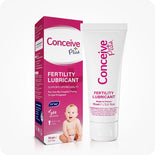
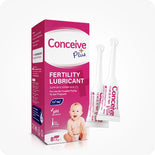
Conceive Plus Fertility Lubricant is specifically formulated to replicate the properties of fertile-quality cervical mucus — pH balanced to 7–8, isotonic, and containing calcium and magnesium ions that support sperm motility. It provides the supportive environment that may be insufficient from natural mucus alone, without the spermicidal effects of standard lubricants that can reduce sperm motility by up to 60–100%.
Optimising Your Fertile Window: Practical Strategies
Once you've identified your ovulation pattern, here's how to maximise your chances during the fertile window:
- Timing: Have intercourse every 1–2 days from the start of your fertile window (5 days before expected ovulation) through the day after the LH surge
- Lubricant: Use only fertility-safe lubricants (Conceive Plus) — standard lubricants kill sperm
- Position: No evidence that specific positions improve conception rates; focus on comfort and frequency
- Post-intercourse: No evidence that lying flat afterward improves rates; sperm reach the fallopian tubes within minutes regardless of position
- Stress: Acute cycle-to-cycle stress doesn't prevent ovulation in most cycles, but chronic high stress can affect cycle regularity over time; support systems and stress management matter
- Supplements: Continue prenatal vitamins and fertility supplements consistently — the nutrients in them support egg quality over the 90-day maturation cycle, not just in the moment of ovulation
Frequently Asked Questions: Understanding Ovulation
Q: Does ovulation always happen on day 14?
A: No. This is one of the most persistent fertility myths. Ovulation timing varies significantly by woman and cycle. It occurs approximately 12–16 days before the start of the next period, so women with longer or shorter cycles will ovulate at different points. Track your own cycle rather than relying on day-14 averages.
Q: Can I ovulate twice in one cycle?
A: Ovulation of two eggs can occur within a 24-hour window in one cycle (resulting in fraternal twins if both are fertilised), but a second ovulation later in the same cycle (beyond the 24-hour window) is not supported by current evidence. After ovulation, progesterone prevents further follicle maturation for the rest of that cycle.
Q: How long is the egg viable after ovulation?
A: The egg is viable for approximately 12–24 hours after ovulation. This is why timing intercourse for the days leading up to ovulation (when sperm are waiting for the egg) is more effective than trying to time it perfectly on the day.
Q: What if I miss my OPK surge?
A: LH surges can be brief (sometimes peaking and passing within a single test window), making them easy to miss with once-daily testing. If you miss a surge but had intercourse regularly throughout your fertile window, you may still have timed well. Consider testing twice daily (morning and afternoon) if you've had difficulty detecting surges.
Q: Can I ovulate while breastfeeding?
A: Yes — ovulation can return during breastfeeding, often before the return of regular periods. Many women first ovulate postpartum without realising it. If you're breastfeeding and want to either avoid or achieve pregnancy, it's important not to assume breastfeeding provides reliable contraception after the first few months.
Q: Does Conceive Plus help with ovulation?
A: Conceive Plus fertility lubricant and supplements don't trigger or improve ovulation directly — they create the best possible conditions for fertilisation once ovulation occurs. The lubricant replicates fertile cervical mucus; supplements support overall reproductive health and egg quality over time.
Q: Is it possible to feel ovulation?
A: Around 20% of women experience Mittelschmerz — a brief one-sided pelvic pain at ovulation. Some women also notice distinct changes in libido, breast sensitivity, or bloating. Many women feel nothing specific — which is entirely normal. Physical symptoms alone are not reliable for pinpointing ovulation timing.
Q: When should I see a doctor about irregular ovulation?
A: If your cycles are consistently outside the 21–35 day range, vary by more than 7–9 days cycle to cycle, or if you experience long periods without a period, consulting a healthcare provider is advisable. Irregular ovulation is one of the most common and treatable causes of fertility challenges — early investigation leads to earlier intervention.
Give your fertile window the best possible support. Explore Conceive Plus India — fertility lubricant, women's fertility supplements, and prenatal vitamins for every step of your conception journey.