
The Two-Week Wait: What's Really Happening in Your Body and How to Stay Grounded
What Is the Two-Week Wait?
The two-week wait (TWW) is the period between ovulation and the expected start of your next menstrual period — or the moment when a pregnancy test becomes reliably accurate. For women in natural cycles, this is typically 12–16 days. For those undergoing IVF, the official waiting period after embryo transfer is usually 10–14 days before the blood test (beta hCG) that confirms pregnancy.
No two-week period has ever felt as long. This is the window during which a fertilised egg, if conception occurred, must travel down the fallopian tube, implant in the uterine lining, and begin producing enough human chorionic gonadotropin (hCG) to be detected. It is a time of biological uncertainty — and for those who have been trying to conceive for months or years, it is often one of the most emotionally intense experiences imaginable.
Understanding what is actually happening inside your body during these days — and knowing why symptoms appear when they do — can help ground you in biology rather than anxiety.
What Happens Biologically During the TWW
Supporting Your Fertility Journey
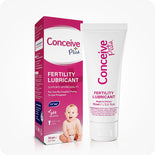
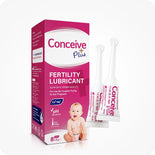
Conceive Plus is formulated by fertility specialists to work with your body — not against it. Our fertility-friendly lubricant is clinically tested to match the pH and osmolality of fertile cervical mucus, ensuring sperm can survive and reach the egg.
The two-week wait is far from empty time — it is one of the most developmentally complex periods in early human reproduction.
Days 1–5 Post-Ovulation: Fertilisation and Early Development
If sperm met the egg in the fallopian tube, fertilisation occurs within 12–24 hours of ovulation. The resulting single cell (zygote) immediately begins dividing — into 2 cells, then 4, then 8. By day 3, the embryo is at the morula stage (a solid ball of cells). By day 5, it reaches the blastocyst stage — a more complex structure with an inner cell mass that will become the fetus, and an outer layer that will form the placenta.
During this time, the embryo travels slowly down the fallopian tube toward the uterus, nourished by tubal secretions.
Days 6–10 Post-Ovulation: Implantation
The blastocyst arrives in the uterus around day 5–6 post-ovulation and begins "hatching" from its outer membrane (zona pellucida). It then begins the process of implantation — attaching to and embedding into the endometrial lining. This process is not instantaneous; it takes place over several days, from approximately days 6–10 post-ovulation.
Successful implantation requires a precisely receptive endometrium — a state regulated by oestrogen and progesterone. Many implantations fail silently, without the woman even knowing conception occurred.
Days 10–14 Post-Ovulation: hCG Production Begins
Once implantation is established, the outer layer of the embryo (trophoblast) begins producing hCG. This hormone signals to the corpus luteum (the remnant of the follicle that released the egg) to keep producing progesterone, which maintains the uterine lining and prevents menstruation.
HCG levels at this stage are very low — typically 5–50 mIU/mL. Home pregnancy tests can detect hCG from about 10–12 days post-ovulation, though testing before 14 days increases the risk of a false negative result. Blood beta-hCG tests can detect lower levels and are more reliable for early testing.
TWW Symptoms: Real Pregnancy Signs vs Progesterone Effects
This is where the TWW becomes emotionally complicated. The symptoms associated with early pregnancy are, in many cases, indistinguishable from the side effects of progesterone — the hormone that dominates the luteal phase regardless of whether conception occurred.
Progesterone Effects (Occur Whether Pregnant or Not)
- Breast tenderness or soreness
- Bloating and mild abdominal cramping
- Fatigue
- Mood changes, including irritability or low mood
- Increased basal body temperature
- Changes in appetite
Potential Early Pregnancy Indicators (Occur Only If Implantation Has Succeeded)
- Implantation bleeding: Light spotting around days 6–12 post-ovulation, caused by the blastocyst embedding into the endometrium. Occurs in approximately 20–30% of pregnant women.
- Persistent nausea: Usually doesn't begin until hCG levels rise significantly — typically 5–6 weeks gestational age (which is only 3–4 weeks after ovulation). Very early nausea in the TWW is more likely psychological or progesterone-related.
- Heightened sense of smell: Associated with rising hCG, but difficult to distinguish from progesterone effects in early stages.
The critical message: you cannot reliably tell from symptoms alone whether you are pregnant during the TWW. Many women report feeling certain they are pregnant — and are not. Others are convinced they are not pregnant — and are. The only reliable way to know is a pregnancy test after day 14.
Testing During the TWW: When, Why, and Why Not
The urge to test early is almost universal, and with ultra-sensitive home pregnancy tests now widely available, testing before day 14 is very common. However, early testing carries significant risks:
The Case Against Early Testing
- False negatives: HCG levels may be below detectable thresholds even if implantation has occurred. A negative result before day 12 does not mean you are not pregnant.
- Chemical pregnancies: Testing very early may reveal a brief hCG signal from an embryo that implanted but subsequently failed — a "chemical pregnancy." While this information has some value, for many people it prolongs grief without providing meaningful clinical information, as chemical pregnancies are not routinely investigated and are generally considered a failed conception rather than a miscarriage.
- Psychological harm: Each negative test extends the emotional pain of the wait, even if pregnancy was always possible. Multiple early negative tests can be demoralising and can colour the entire cycle experience.
The Pragmatic Approach
Most fertility specialists recommend waiting until at least 14 days post-ovulation (or the date specified by your clinic after embryo transfer) before testing. At this point, hCG levels in a viable pregnancy are almost always detectable by standard home pregnancy tests. A positive result at this point is far more likely to be a true positive.
How to Manage the TWW: Evidence-Based and Practical Strategies
The TWW is not just a biological event — it is a psychological challenge. Here are strategies that can genuinely help:
Distraction and Engagement
The research on anxiety management consistently supports engaging in absorbing activities as one of the most effective distraction techniques. During the TWW, plan activities that genuinely occupy your attention — a hobby project, a course, a social event, or physical activity you enjoy.
Movement and Exercise
Moderate exercise — walking, yoga, swimming, cycling — is safe during the TWW and provides documented anxiety-reduction benefits through endorphin release and cortisol reduction. Avoid very high-intensity exercise until you know the result, not because it is harmful, but to avoid adding a variable during an already uncertain time.
Mindfulness and Acceptance Practices
Mindfulness-based stress reduction (MBSR) has shown benefit in fertility populations. The core practice — noticing thoughts and sensations without attaching meaning or judgment — is particularly helpful during the TWW, when every physical sensation becomes scrutinised. Even 10–15 minutes of guided meditation daily can measurably reduce anxiety scores.
Setting Boundaries With Information-Seeking
The internet is full of TWW symptom-spotting forums. While community support has real value, endless symptom comparison generally increases anxiety without providing useful information. Consider limiting fertility-related internet searches during the TWW — set a specific time limit if necessary.
Communicate With Your Partner
Partners may experience the TWW very differently. Open communication about how each person is feeling, what support they need, and how to handle the result together — whatever it is — helps prevent the isolation and disconnection that the TWW can create.
Continue Normal Life
Many women in the TWW treat themselves as if they are already pregnant — restricting diet, avoiding all activities, withdrawing from normal life. While reasonable precautions are sensible, living normally protects your emotional health and maintains perspective. Pregnancy testing has not confirmed a pregnancy yet; protect your wellbeing as though you are living fully.
After the TWW: Handling Both Outcomes
A Positive Result
A positive test is wonderful news — and also the beginning of a new anxious wait: the first ultrasound, the heartbeat, the 12-week scan. Allow yourself to feel the joy while also acknowledging that early pregnancy comes with its own uncertainties. Contact your GP or fertility clinic for guidance on next steps, progesterone support if you are on a medicated cycle, and early scan scheduling if appropriate.
A Negative Result
A negative result is a loss — every single time. Even couples who have been through many cycles feel the grief fresh each month. Allow yourself to feel it. Do not rush to "bounce back" or force positivity. The grief is legitimate.
After a negative cycle:
- Give yourself a day or two before immediately planning the next cycle
- Talk to your partner, a trusted friend, or a counsellor
- Review whether any changes to your approach are warranted, or seek advice from your fertility specialist
- Remember that conception is probabilistic — most couples do not conceive in any given month, even under optimal conditions
Frequently Asked Questions About the Two-Week Wait
Can I drink alcohol during the TWW?
The safest approach is to minimise or avoid alcohol during the TWW, since conception may have occurred. The risk of very early alcohol exposure to a newly implanted embryo is not well-defined, but given the uncertainty, most specialists recommend treating the TWW as a precautionary pre-pregnancy period.
Is cramping in the TWW normal?
Yes — cramping is common in the luteal phase regardless of pregnancy status, due to progesterone. Implantation can also cause mild cramps (often one-sided, around days 6–10 post-ovulation). Severe cramping warrants medical attention.
Can stress in the TWW prevent implantation?
There is no strong evidence that normal levels of psychological stress during the TWW prevent implantation. The mechanisms of implantation are primarily hormonal and structural. Manage stress for your own wellbeing — not because you believe it is affecting the outcome.
When should I test after IVF transfer?
Follow your clinic's specific instructions. Most IVF clinics schedule a blood beta-hCG test 10–14 days after a Day 5 embryo transfer. Testing earlier with a home pregnancy test is possible but may give misleading results if trigger shot hCG (used to mature eggs before retrieval) has not fully cleared.
What should I eat during the TWW?
Continue eating a balanced, nutritious diet as you would throughout your preconception period — whole foods, plenty of vegetables and fruits, lean protein, and healthy fats. There is no special "TWW diet" that improves outcomes, but maintaining good nutrition is always beneficial.
My BBT dropped — does that mean my period is coming?
A sustained drop in BBT in the late luteal phase can indicate that progesterone is declining, which often precedes menstruation. However, some women see an "implantation dip" in BBT around days 7–10 of the luteal phase. Interpreting single BBT readings is inherently imprecise — trends over several days are more meaningful.
How long does implantation bleeding last?
Implantation bleeding, when it occurs, is typically very light (spotting), lasts 1–3 days, and is often pink or light brown in colour (as opposed to the brighter red of menstruation). However, not all spotting is implantation bleeding, and not all pregnancies involve implantation bleeding.
Can I take progesterone supplements during the TWW?
Progesterone supplementation during the luteal phase is standard practice in IVF cycles and may be prescribed in natural cycles for women with a known luteal phase defect. Self-prescribing progesterone without medical guidance is not recommended. Speak with your fertility specialist if you have concerns about luteal phase support.
What is a chemical pregnancy?
A chemical pregnancy is an early pregnancy loss that occurs very shortly after implantation — so early that it is detectable only by sensitive pregnancy tests, not by ultrasound. HCG rises briefly before declining, and menstruation follows, often on time or only slightly late. Chemical pregnancies are thought to account for 50–75% of all miscarriages and may be more common than previously realised due to the availability of early-testing technologies.
Should I rest during the TWW?
Bed rest during the TWW has not been shown to improve pregnancy rates and is not recommended. Continue your normal daily activities. The exception is if you have specific medical instructions — for example, after an egg retrieval procedure or embryo transfer, your clinic may advise a brief period of reduced activity.
Ready to Optimise Your Fertility?
Whether you're just starting your journey or have been trying for a while, Conceive Plus products are designed by fertility experts to support every step — from optimising the conception environment to providing the nutrients your body needs.
Trusted by thousands of couples around the world. Formulated with care, backed by science.