
Timing Intercourse for Conception: A Complete Guide to Your Fertile Window
Timing Intercourse for Conception: A Complete Guide to Your Fertile Window
One of the most important — and most misunderstood — aspects of trying to conceive is the timing of intercourse. Many couples try for months or even years without realising that the window for conception is much narrower than they assumed. Understanding your fertile window with precision, and knowing how to optimise each opportunity within it, can dramatically reduce the time it takes to conceive.
This comprehensive guide covers everything you need to know about identifying and maximising your fertile window, from cycle tracking and ovulation signs to the role of fertility-friendly lubricants and supplements — including how Conceive Plus supports your fertility journey every step of the way.
Understanding the Menstrual Cycle and Fertile Window
The menstrual cycle is a precisely orchestrated sequence of hormonal events that prepares the body for pregnancy each month. Understanding this cycle — your individual cycle — is the foundation of effective conception timing.
The follicular phase begins on the first day of your period and ends at ovulation. During this phase, rising oestrogen levels cause the endometrium (uterine lining) to thicken and follicles to develop in the ovary. One follicle typically becomes dominant and grows to maturity.
Ovulation is triggered by a surge in Luteinising Hormone (LH), which causes the dominant follicle to rupture and release a mature egg. The egg is viable for only 12–24 hours after release — this is a narrow window indeed.
The luteal phase follows ovulation. The corpus luteum (the remnant of the follicle) produces progesterone, which maintains the thickened endometrium and prepares it for embryo implantation. If conception occurs, the embryo implants approximately 6–12 days after ovulation. If not, the corpus luteum degrades, progesterone drops, and menstruation begins — starting the cycle again.
The fertile window spans approximately 6 days: the 5 days before ovulation and the day of ovulation itself. This window exists because sperm can survive in the female reproductive tract for up to 5 days when fertile-type cervical mucus is present — meaning sperm deposited up to 5 days before ovulation can still fertilise an egg.
A landmark study published in the New England Journal of Medicine found that 92% of pregnancies resulted from intercourse during these 6 days. On the most fertile day (the day before ovulation), per-cycle pregnancy rates are highest — approximately 30–35% for young, healthy couples.
Common Myths About Conception Timing
Many couples hold misconceptions about conception timing that significantly reduce their monthly chances. Let's address the most common:
Myth: Ovulation always happens on day 14.
The "day 14" rule applies only to a textbook 28-day cycle, and even then it's an average, not a guarantee. Research shows fewer than 30% of women actually ovulate on day 14. Ovulation timing varies widely between women (anywhere from day 6 to day 21+) and even cycle to cycle in the same woman. You must track your own ovulation — don't assume based on calendar math.
Myth: Having sex every day maximises chances.
Daily intercourse during the fertile window is effective, but having intercourse every single day throughout the entire cycle doesn't significantly improve — and may slightly reduce — chances due to sperm quality factors. For most couples, every 1–2 days during the fertile window is optimal. Men with known low sperm count may benefit from slightly longer abstinence (2–3 days) to maximise sperm concentration.
Myth: You need to rest with your legs up after sex.
The "legs in the air" position after intercourse is a popular myth without scientific support. Millions of sperm enter the cervix within seconds of ejaculation, and those that will fertilise do so regardless of post-coital position. Lying down for 15 minutes is harmless and perhaps comforting, but vigorous positioning is unnecessary.
Myth: All lubricants are fertility-friendly.
This is perhaps the most consequential myth. Most commercial lubricants — including water-based options many consider "natural" — are significantly harmful to sperm. Studies show standard lubricants can reduce sperm motility by 60–90% within 30 minutes of exposure. Always use a specifically fertility-tested lubricant like Conceive Plus when you need lubrication during TTC.
Identifying Ovulation: Your Signs and Signals
Your body communicates its approach to ovulation through a series of measurable physical signs. Learning to read these signs transforms ovulation tracking from guesswork to science.
Cervical Mucus Changes
Cervical mucus is the most direct indicator of fertility. As oestrogen rises in the days before ovulation, the cervix produces progressively more — and more fertile — mucus:
- Early cycle (after period): Dry or sticky, minimal discharge — not sperm-friendly
- Approaching ovulation: Creamy, lotion-like, white or yellow — partially sperm-supportive
- Peak fertility (1–3 days before ovulation): Clear, slippery, stretchy — like raw egg whites. This EWCM (egg white cervical mucus) is maximally sperm-supportive, keeping sperm alive for days and guiding them toward the egg
- After ovulation: Returns to sticky or dry abruptly
The day of maximum, most stretchy EWCM is typically the most fertile day. Intercourse on this day and the 1–2 days surrounding it gives the highest per-cycle pregnancy probability.
Ovulation Predictor Kits (OPKs)
OPKs detect the LH surge that triggers ovulation approximately 24–48 hours before egg release. A positive OPK means ovulation is likely imminent — have intercourse that day and the next two days.
Basal Body Temperature (BBT)
Your resting temperature rises by approximately 0.2–0.5°C after ovulation due to progesterone. While BBT confirms ovulation has occurred (retrospective), consistent charting over several cycles reveals your individual ovulation pattern and helps predict timing in future cycles.
Mittelschmerz (Ovulation Pain)
Some women experience a distinct twinge or cramping sensation on one side of the lower abdomen around the time of ovulation. This is called Mittelschmerz (German for "middle pain") and occurs as the follicle ruptures and releases the egg. Not all women experience this, but those who do can use it as an additional timing signal.
Cervical Position Changes
During the fertile window, the cervix rises, softens, and opens slightly to facilitate sperm entry. You can check cervical position with clean fingers. A high, soft, open cervix = approaching ovulation. A low, firm, closed cervix = non-fertile phase.
Using Ovulation Predictor Kits (OPKs) Effectively
OPKs are the most widely used and reliable way to predict ovulation in advance. Here's how to use them effectively:
- When to start testing: Subtract 17 from your average cycle length. For a 30-day cycle, start testing on day 13. For a 26-day cycle, start on day 9.
- When during the day: Test between 10am and 2pm. LH surges in the morning but takes a few hours to appear in urine at detectable levels. Avoid excessive fluids for 2 hours before testing.
- How often to test: Once daily until you get a positive (test line as dark or darker than control), then test twice daily to precisely capture the surge peak. The surge typically lasts 12–36 hours.
- Act on a positive: Have intercourse the day of your first positive OPK and the following 1–2 days.
- Choose the right OPK: Basic strips are cost-effective and accurate. Digital tests remove subjectivity. Advanced monitors (Clearblue Advanced, Mira) detect both LH and oestrogen, extending the identified fertile window.
Timing Intercourse: The Optimal Schedule
Once you've identified your fertile window, the next question is: how often should you have intercourse, and when exactly?
Research is clear that the highest per-cycle pregnancy rates come from intercourse in the 1–2 days before ovulation. However, intercourse starting from the onset of EWCM or a positive OPK on a rising pattern is excellent practice, as it ensures sperm are present before and during ovulation.
Recommended schedule for most couples:
- Begin having intercourse when EWCM first appears or 5 days before expected ovulation
- Have intercourse every 1–2 days during the fertile window
- Increase frequency to daily on the day of and day before a positive OPK
- Continue for 1 day after the positive OPK (to catch late ovulation)
- There is no need for intercourse during the rest of the cycle from a conception standpoint
For couples managing stress, reduced desire, or intercourse difficulties during the TTC journey, maintaining intimacy and not reducing sex entirely to "scheduled TTC sex" is important for relationship health. Connection and intimacy support overall wellbeing during what can be an emotionally demanding process.
The Role of Fertility Lubricant in Conception Timing
When intercourse is timed around ovulation, additional lubrication is often needed or desired — particularly for couples under the pressure of "scheduled sex," which can reduce natural arousal and lubrication. This is completely normal and easily addressed — but the lubricant you choose matters enormously.
As mentioned above, standard lubricants can decimate sperm viability. Conceive Plus fertility lubricant is specifically formulated to address this:
- pH matched: The vaginal pH during the fertile window rises toward 7.0–8.5 to support sperm survival. Standard lubricants are often acidic (pH 4–5), which is lethal to sperm. Conceive Plus matches fertile-window pH precisely.
- Isotonic formula: Matches the osmolality of fertile cervical mucus, preventing osmotic shock to sperm cells.
- Calcium and magnesium ions: These ions are naturally present in fertile reproductive fluids and support sperm capacitation — the process that activates sperm to fertilise an egg. Conceive Plus is the only fertility lubricant to include these ions.
- Clinically tested: Non-toxic to sperm by WHO standards and validated in published clinical studies.
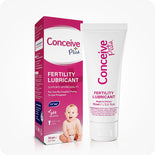
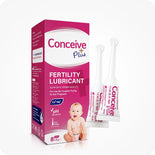
- Available in multiple formats: Multi-use tube (3.9oz) for general use, and single-use pre-filled applicators for internal application that delivers lubricant directly to the cervical area — ideal for timed fertile-window intercourse.
For couples in India trying to conceive, Conceive Plus is available through the Indian store, providing the same clinically validated fertility lubricant trusted by couples worldwide.
The Two-Week Wait: What to Do and Not Do
The two-week wait (TWW) is the period between ovulation and your expected period — when an embryo, if conception occurred, would be implanting and establishing the pregnancy. It is notoriously emotionally difficult, and knowing what's happening in your body (and what isn't) can help manage the anxiety.
What's happening during the TWW:
- Days 1–5 post-ovulation: Fertilisation, if it has occurred, happens within 12–24 hours of ovulation. The fertilised egg (zygote) divides rapidly as it travels through the fallopian tube toward the uterus.
- Days 5–7: The embryo reaches the uterus as a blastocyst.
- Days 6–12: Implantation occurs — the blastocyst breaches the uterine lining and begins to embed. Some women experience light spotting (implantation bleeding) or mild cramping at this stage.
- Days 10–14: hCG (the pregnancy hormone) is produced and rises rapidly. At 10–12 days post-ovulation, sensitive early-response pregnancy tests may begin to detect it.
During the TWW, continue your prenatal supplements including Conceive Plus Women's Fertility Support. Avoid alcohol, limit caffeine, don't smoke, maintain your normal gentle exercise routine, and get adequate sleep. There is no evidence that "taking it easy" or bed rest improves implantation chances unless specifically medically advised.
When Conception Takes Longer: Staying the Course
Even with perfect timing and optimal health, conception is not guaranteed in any given cycle. For couples under 35, up to 12 months of trying is considered normal before investigation is warranted. The probability of conception per cycle — even in fertile, healthy couples — is approximately 15–25%.
If after 6–12 months of accurately timed intercourse pregnancy has not occurred, the next step is a fertility evaluation. Initial tests are non-invasive and often very informative: blood tests for hormone levels and ovarian reserve, semen analysis, and pelvic ultrasound. Many causes of delayed conception are very treatable once identified.
Throughout this process, Conceive Plus provides consistent support: supplements that optimise egg and sperm quality, and a fertility lubricant that ensures the fertile-window environment is as supportive as possible for sperm survival and motility.
Frequently Asked Questions: Timing Intercourse for Conception
What is the best time of day to have intercourse for conception?
There is no strong evidence that time of day significantly affects conception rates. The timing relative to ovulation matters far more than the time of day. That said, some small studies suggest sperm count and motility may be slightly higher in morning ejaculations — but this is a minor effect compared to cycle timing.
How long before ovulation should we start having intercourse?
Begin intercourse when you first see EWCM (egg white cervical mucus) or when your OPK first shows a strong reading (approaching positive). For most women, this is 3–5 days before ovulation. Sperm deposited 5 days before ovulation can still fertilise an egg if fertile cervical mucus is present.
Can I use Conceive Plus lubricant with a condom?
Conceive Plus is compatible with latex condoms. However, if you're using condoms, you're not TTC in that cycle. Conceive Plus is designed for TTC couples who need lubrication during unprotected intercourse in the fertile window.
How do I know if I'm actually ovulating?
The most reliable home methods are: positive OPK (confirms LH surge), EWCM (signals approaching ovulation), and sustained BBT rise (confirms ovulation occurred). A mid-luteal phase progesterone blood test (taken 7 days after suspected ovulation) is the clinical gold standard for confirming ovulation.
What if my cycle is irregular — how do I time intercourse?
Irregular cycles make timing more challenging. OPKs are particularly helpful here, as they detect the actual LH surge regardless of when it occurs. Start testing early in your cycle and continue until you detect a positive. Cervical mucus monitoring is also valuable, as EWCM reliably signals approaching ovulation. Women with PCOS or other causes of irregular cycles may benefit from medical evaluation and potentially ovulation induction to achieve more predictable cycles.
Is the missionary position better for conception?
There is no scientific evidence that any sexual position meaningfully affects conception rates. Sperm deposited at or near the cervix are rapidly transported regardless of position. Choose positions that are comfortable and enjoyable for both partners.
Should I use Conceive Plus lubricant every time during my fertile window?
Use Conceive Plus whenever additional lubrication is desired during the fertile window. If natural cervical mucus is abundant and intercourse is comfortable without additional lubrication, it isn't required. However, if you find that "scheduled" TTC sex reduces natural lubrication, Conceive Plus ensures you have a safe, sperm-supportive option that won't harm your chances.
How long after a positive OPK do I ovulate?
Ovulation typically occurs 24–48 hours after the first positive OPK reading. The LH surge usually peaks and then declines within 12–24 hours. Having intercourse on the day of a positive OPK and the following day gives you optimal coverage of the ovulation window.
Can stress affect the timing of ovulation?
Yes. Significant physical or psychological stress can delay or suppress ovulation by disrupting the hypothalamic-pituitary-ovarian axis — the hormonal signalling pathway that controls the cycle. Stress elevates cortisol, which can inhibit GnRH pulsatility and delay the LH surge. This is why cycles may be longer during stressful periods. Managing stress through exercise, adequate sleep, and relaxation practices supports more regular ovulation.
What supplements support a healthy fertile window?
For women: methylfolate, vitamin D3, CoQ10, myo-inositol, omega-3 DHA, and zinc all support regular ovulation and a healthy fertile window. Conceive Plus Women's Fertility Support combines these in a single daily supplement formulated for women who are actively trying to conceive.