
Timing Intercourse for Conception: The Science-Backed Guide to Maximising Your Chances
Timing Intercourse for Conception: The Science-Backed Guide to Maximising Your Chances
Of all the factors influencing how quickly a couple conceives, the timing of intercourse relative to ovulation is one of the most significant — and most commonly misunderstood. Couples trying to conceive often default to general advice (every other day, or around day 14) without understanding the precise biological window that governs conception.
The science of conception timing is clearer than most people realise. This guide explains exactly when to have intercourse, how to identify your fertile window accurately, and how Conceive Plus lubricant and supplements support your conception efforts.
The Biology of the Fertile Window
Understanding when conception is possible begins with understanding the lifespan of eggs and sperm:
- Egg: Survives for approximately 12–24 hours after ovulation. After this window, the egg degenerates and cannot be fertilised in that cycle
- Sperm: Can survive in the female reproductive tract for up to 5 days — but motility and DNA integrity decline with time. Peak fertility for sperm is within the first 24–48 hours after ejaculation
This creates a fertile window of approximately 6 days: the 5 days before ovulation plus the day of ovulation itself. However, the window is not uniformly fertile — conception probability varies significantly by day:
- 5 days before ovulation: ~5% probability per cycle
- 4 days before ovulation: ~11%
- 3 days before ovulation: ~15%
- 2 days before ovulation: ~22%
- 1 day before ovulation: ~26%
- Day of ovulation: ~15% (surprisingly lower — the egg's window is very brief)
- Day after ovulation: ~9% (declining rapidly)
These figures (from Wilcox et al., New England Journal of Medicine, 1995) reveal a critical insight: the two days immediately before ovulation offer the highest probability of conception — higher than ovulation day itself. This is because sperm can be waiting in the fallopian tube when the egg arrives.
The "Every Other Day" vs "Every Day" Debate
Visit conceiveplus.in and explore the full Conceive Plus range — trusted by couples worldwide.
Research on whether daily versus every-other-day intercourse is optimal has generated significant debate. Here's what the evidence shows:
Daily intercourse during the fertile window: Associated with slightly higher sperm counts per ejaculate (some studies suggest 24-hour abstinence maximises count) but no evidence that daily intercourse is harmful to conception — except in specific cases of severe oligospermia where abstinence of 2–5 days is recommended to maximise count.
Every-other-day intercourse: Ensures sperm is always present in the reproductive tract without the psychological pressure of daily scheduled sex. For most couples, this is a practical and effective approach.
Bottom line: For men with normal semen parameters, either daily or every-other-day intercourse during the fertile window is effective. The key is ensuring intercourse occurs in the 2–3 days before ovulation — regardless of frequency pattern. A single act of intercourse on the right day outperforms multiple acts mistimed to the wrong days.
How to Accurately Identify Your Fertile Window
The most common mistake couples make is relying on calendar calculation alone. The "day 14" rule assumes a perfect 28-day cycle — but fewer than 15% of women have cycles consistently close to 28 days. Ovulation can occur between day 8 and day 21 in women with otherwise normal cycles.
Accurate fertile window identification requires physical monitoring:
Ovulation Predictor Kits (OPKs): Detect the LH surge that precedes ovulation by 24–48 hours. A positive OPK means ovulation is expected within 1–2 days — time to have intercourse immediately and again the following day. Digital OPKs with "Peak/High" readings are easier to interpret than line-comparison tests.
Cervical Mucus Observation: As ovulation approaches, cervical mucus transitions from sticky/creamy to clear, slippery, and stretchy — resembling raw egg whites. This egg-white cervical mucus (EWCM) is the body's natural signal of peak fertility. Its presence reliably indicates you are approaching or at your LH surge.
Basal Body Temperature (BBT): A sustained rise in morning temperature (0.2–0.4°C) confirms ovulation has occurred — useful for understanding your pattern over multiple cycles, but retrospective (tells you after the fact).
Advanced fertility monitors: Devices like Clearblue Advanced Digital or Inito measure multiple hormones (LH, estrogen, and in Inito's case, progesterone metabolites) to give the most comprehensive fertile window picture, with up to 4 identified fertile days per cycle.
The Role of Cervical Mucus in Timing Intercourse
Cervical mucus serves a critical biological function: it is the medium through which sperm travel to reach the egg. The consistency and quality of cervical mucus changes dramatically across the cycle:
- Post-menstruation: Dry or minimal — forms a plug that blocks sperm entry to the uterus
- Pre-ovulatory: Increasingly sperm-friendly — creamy, white, becoming more fluid
- Peak fertility: Egg-white consistency — clear, stretchy, slippery. Sperm can survive in this medium for up to 5 days and are guided toward the fallopian tube by crypts in the cervical canal
- Post-ovulation: Returns to thick, sticky consistency — sperm cannot penetrate
Many women experience reduced natural cervical mucus due to dehydration, antihistamine use, previous cervical procedures, hormonal conditions, or advancing reproductive age. When natural cervical mucus is insufficient, a sperm-safe lubricant becomes essential.
Why Regular Lubricants Can Harm Your Conception Efforts
Many couples use lubricants during intercourse — but most commercially available lubricants are harmful to sperm. Studies show that common lubricants including KY Jelly, petroleum jelly, and saliva can:
- Reduce sperm motility by up to 60–89% within 30 minutes
- Cause sperm to swim in abnormal patterns that prevent them reaching the egg
- Have a pH that is hostile to sperm (sperm require an alkaline pH of 7.0–8.5; most lubricants are significantly more acidic)
- Have high osmolality that damages sperm cell membranes
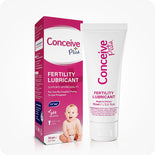
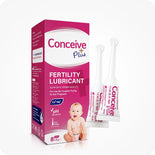
This is where Conceive Plus Fertility Lubricant — available at conceiveplus.in — provides a critical advantage for couples trying to conceive.
Conceive Plus Lubricant: Designed for Conception
Conceive Plus is uniquely formulated to be biologically compatible with both sperm and the natural vaginal environment during the fertile window. Unlike regular lubricants, Conceive Plus:
- Matches sperm-friendly pH (7.0–8.5): Replicating the alkaline environment of fertile cervical mucus, rather than the acidic pH that harms sperm
- Matches physiological osmolality: Does not damage sperm membranes through osmotic stress
- Contains calcium and magnesium ions: These trace minerals are naturally present in fertile cervical mucus and support sperm function and capacitation — the process sperm undergo to become capable of fertilising an egg
- FDA-cleared for use when trying to conceive
- Available in gel and individual application format
- Isotonic formula: Certified compatible with sperm function
By mimicking the properties of fertile cervical mucus, Conceive Plus allows couples to use lubrication comfortably without compromising their conception chances — and may actively support sperm function during the critical journey to the egg.
Time intercourse with confidence — and the right support.
Explore Conceive Plus Fertility Lubricant — designed to work with your body, not against it, during your most fertile days.
Common Timing Mistakes Couples Make
Mistake 1: Having intercourse only on "ovulation day"
As the data shows, ovulation day actually has a lower conception probability than the two days before it. Waiting until you confirm you've ovulated (via BBT rise, for example) is too late. Act when you detect the fertile window approaching (EWCM, OPK high) — not after it's confirmed past.
Mistake 2: Relying solely on calendar calculation
"I always ovulate on day 14" is true until it isn't. Cycle length variation, stress, illness, and hormonal fluctuations all affect ovulation timing. Physical monitoring (OPKs, mucus observation) catches these variations that calendar apps cannot.
Mistake 3: Using harmful lubricants
Using conventional lubricants during fertile window intercourse can eliminate the conception benefit of good timing entirely. Switch to Conceive Plus at the first sign of your fertile mucus.
Mistake 4: Having sex only when physically aroused
Ironically, scheduled conception sex can reduce natural arousal — and natural lubrication. Foreplay, connection, and Conceive Plus lubricant together ensure that timed intercourse is both comfortable and conception-optimised.
Mistake 5: Treating the fertile window as 24 hours
The fertile window is 5–6 days, with peak probability in the 2 days before ovulation. Couples who have intercourse 2–3 times in this window have significantly higher per-cycle probability than those who try once on the assumed ovulation day.
Supplements That Support the Timing Window
While timing intercourse correctly is the most direct intervention for improving conception chances, the quality of eggs and sperm during the fertile window is equally critical. A well-timed encounter between a poor-quality egg and low-motility sperm will not succeed.
Fertility supplements that support outcomes during the fertile window include:
- For women: CoQ10 (egg mitochondrial energy), methylfolate (DNA integrity), inositol (ovulatory regularity), vitamin D (implantation support)
- For men: Zinc and selenium (sperm production and DNA protection), L-carnitine (motility fuel), CoQ10 (mitochondrial energy for sperm), vitamin C and E (antioxidant protection against DNA fragmentation)
The Conceive Plus fertility supplement range supports both partners with clinically-informed nutrients — ensuring that when the timing is right, both egg and sperm quality are at their best.
Frequently Asked Questions About Timing Intercourse for Conception
How many days before ovulation should we have intercourse?
The highest probability window is 1–2 days before ovulation. Starting intercourse 2–3 days before predicted ovulation (based on OPK or fertile mucus signs) and continuing through the OPK peak gives the best coverage of the fertile window.
Can we have too much sex when trying to conceive?
For men with normal sperm counts, daily intercourse is generally not a problem and does not significantly deplete sperm count below fertile thresholds. For men with borderline or low sperm count, every-other-day intercourse may preserve sperm count better. The bigger issue is usually mistiming sex to outside the fertile window — not having too much.
Does the position of intercourse affect conception?
No position has been shown in clinical research to significantly improve conception rates. Sperm are not significantly aided or hindered by position — they swim actively against fluid currents. The concern about sperm "falling out" after intercourse is also unfounded; motile sperm enter the cervical crypts within seconds of ejaculation, regardless of position. Lying still afterward for 15–20 minutes is sometimes recommended but has minimal evidence basis.
What if we can't have intercourse every day during the fertile window due to travel or work?
Prioritise the 1–2 days before your OPK peak. If your partner is absent during the peak, the days leading up to it still give meaningful conception probability, particularly 2–3 days before expected ovulation. Communicate your fertile window predictions in advance so you can plan around them.
How soon after coming off birth control can we start trying?
Fertility returns quickly after stopping most forms of hormonal contraception. Ovulation typically resumes within 1–3 months after stopping the pill. The contraceptive implant or injection may take longer (3–6 months for the injection). Once regular cycles resume, start tracking your fertile window actively. Taking folate/methylfolate before you stop contraception is recommended.
Can stress affect conception even with perfect timing?
Yes. Chronic high stress can disrupt the LH surge needed to trigger ovulation (potentially delaying or suppressing it), reduce cervical mucus production, and may impair implantation via cortisol-mediated immune changes. Managing stress during your fertile window — through relaxation, mindfulness, or connection with your partner — is not just emotional support; it's genuine fertility support.
Conclusion: Timing + Quality = Conception Success
Getting the timing right is essential — but it's half of the equation. The 2 days before ovulation give your highest per-cycle probability, but only if the egg and sperm that meet are healthy, well-nourished, and given the right environment to complete the journey.
Accurate tracking with OPKs and cervical mucus observation identifies the window. Conceive Plus lubricant provides the sperm-safe environment. Conceive Plus supplements support the underlying quality of both egg and sperm. Together, they give every act of timed intercourse the best possible chance of resulting in a healthy pregnancy.
Every fertile window deserves the best possible conditions.
Explore Conceive Plus Fertility Lubricant and Fertility Supplements — your complete conception support system.
Browse our complete fertility product range at conceiveplus.in — free shipping available on qualifying orders.