
Fertility Lubricant: How to Choose the Right One When Trying to Conceive
Fertility Lubricant: How to Choose the Right One When Trying to Conceive
For millions of couples trying to conceive (TTC), the choice of lubricant is a decision with real consequences for sperm health and conception chances. Standard personal lubricants — even many marketed as "natural" or "gentle" — can damage sperm within minutes of contact, dramatically reducing the chances of fertilisation. A fertility lubricant specifically formulated to be sperm-compatible can make an important difference for couples on their conception journey.
This comprehensive guide explains why most lubricants are harmful to sperm, what makes a lubricant truly fertility-friendly, and how Conceive Plus fertility lubricant stands out as the leading choice for couples trying to conceive. Understanding your fertility lubricant is one of the simplest optimisations you can make while TTC.
Why Most Lubricants Are Harmful to Sperm
The problem with conventional lubricants isn't immediately obvious. They feel comfortable. They're widely available. And when you're trying to conceive, vaginal dryness during intercourse is something many couples understandably want to address. But the reality is that standard personal lubricants create a hostile environment for sperm in two key ways:
1. pH incompatibility
Fertile cervical mucus has a pH of approximately 7.2–8.0 — slightly alkaline — which is the optimal environment for sperm survival and motility. Most conventional lubricants have an acidic pH (4.0–5.0), similar to normal vaginal pH outside the fertile window. This acidic environment immobilises and kills sperm within minutes of contact. A true fertility lubricant must match the pH of fertile cervical mucus.
2. Osmolality mismatch
Osmolality refers to the concentration of dissolved particles in a solution. Human cells, including sperm, are designed to function optimally in a specific osmolality range (approximately 280–380 mOsm/kg). Most commercial lubricants are either hyperosmotic (far more concentrated than sperm cells) or hypo-osmotic. Hyperosmotic lubricants cause sperm to shrink and dehydrate; hypo-osmotic ones cause them to swell and rupture.
A landmark study published in Fertility and Sterility tested the effects of popular lubricants on sperm motility. KY Jelly reduced sperm motility by 60–100% within 30 minutes. Astroglide performed similarly. Even olive oil — often suggested as a "natural" alternative — significantly impaired motility. Only purpose-designed fertility lubricants maintained adequate sperm motility and viability. This is why choosing the right fertility lubricant matters.
What Makes a Lubricant Truly Fertility-Friendly?
Ready to support your fertility journey?
Conceive Plus offers clinically formulated fertility supplements and lubricants trusted by couples worldwide.
Shop Conceive Plus →A genuine fertility lubricant must meet several specific criteria to protect sperm:
Sperm-compatible pH (7.2–8.0): Matching the pH of fertile cervical mucus, not the acidic vaginal baseline
Iso-osmotic formulation (280–380 mOsm/kg): Matching the osmolality of seminal plasma and cervical mucus to prevent osmotic damage to sperm
Non-cytotoxic ingredients: Free from compounds (chlorhexidine, glycerol in high concentrations, nonoxynol-9, parabens) that are directly toxic to sperm
Viscosity close to fertile cervical mucus: Allows sperm to swim through the lubricant rather than being impeded by it
Regulatory clearance: Ideally FDA-cleared (510(k)) or CE-marked specifically as a medical device for use by couples trying to conceive
Conceive Plus Fertility Lubricant: The Science Behind It
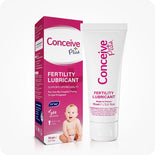
Conceive Plus is a fertility lubricant specifically developed for couples trying to conceive. It was formulated by a team of reproductive scientists and is the only fertility lubricant that contains calcium and magnesium ions — two minerals that play a direct physiological role in sperm function.
Calcium ions are essential for sperm capacitation — the process by which sperm acquire the ability to fertilise an egg. During capacitation (which normally occurs in the female reproductive tract), calcium influx triggers changes in sperm motility pattern and enzyme release needed for egg penetration. By including calcium ions, Conceive Plus fertility lubricant mimics the mineral composition of fertile cervical mucus.
Magnesium ions support sperm motility at the mitochondrial level. Magnesium is a cofactor for ATP synthesis — the energy currency that drives sperm flagellar movement. Magnesium is naturally present in seminal plasma and cervical secretions.
Additional Conceive Plus properties:
- pH 7.2–8.0 — matched to fertile cervical mucus
- Iso-osmotic formulation — matched to seminal plasma
- FDA-cleared as a device intended for use by couples who are trying to conceive
- CE marked in the EU
- Used and recommended by fertility clinics worldwide
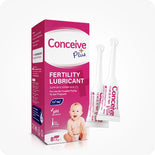
- Available in multi-use tube and single-use pre-filled applicators (for timed intercourse)
Conceive Plus vs Pre-Seed: Which Fertility Lubricant Is Better?
Pre-Seed is another fertility lubricant that has been on the market since the early 2000s and is marketed as sperm-friendly. It was one of the first products in this category and has a large user base. But how does it compare to Conceive Plus?
The critical difference is in the mineral composition. Pre-Seed does not contain calcium or magnesium ions. Conceive Plus is the only fertility lubricant that includes these sperm-essential minerals. Both products have sperm-compatible pH and osmolality — but Conceive Plus goes further by replicating the ionic environment of fertile cervical mucus more completely.
Clinical studies and independent laboratory testing comparing fertility lubricants have consistently shown Conceive Plus maintains equivalent or superior sperm motility and viability compared to Pre-Seed, with the additional benefit of calcium and magnesium for sperm capacitation support. When you're comparing fertility lubricants, calcium and magnesium content is the differentiator.
Conceive Plus is also FDA-cleared and CE-marked, has been adopted by IUI clinics as a catheter lubricant, and is available in a wider range of formats including individual applicators — which allow pre-loading directly into the vagina for optimal placement near the cervix.
When Do You Need a Fertility Lubricant?
Not every couple needs a lubricant — but many do, and some need one more urgently than others:
You likely need a fertility lubricant if:
- You experience vaginal dryness during intercourse
- You're taking fertility medications (Clomid, Letrozole) that reduce cervical mucus as a side effect
- You have PCOS, which is associated with reduced and lower-quality cervical mucus
- You're in the perimenopause or have low oestrogen levels
- You're breastfeeding while TTC again (breastfeeding suppresses oestrogen, reducing natural lubrication)
- You've been TTC for several months and want to optimise every variable
- You're doing IUI — the catheter requires lubrication, and a sperm-friendly lubricant prevents catheter-induced sperm damage
Even if you don't experience dryness: If you're using any lubricant at all during TTC, replacing it with a fertility lubricant is a simple, low-cost optimisation with no downside.
How to Use a Fertility Lubricant Correctly
Using a fertility lubricant correctly maximises its benefit:
Timing: Apply 5–15 minutes before intercourse to allow warming and spreading
Amount: A pea-sized to fingertip amount internally; a small amount externally. More isn't better — excess lubricant can dilute semen
Internal vs external application: Internal application (via applicator or finger) near the cervix is more effective than external application alone
Pre-filled applicators: Conceive Plus single-use applicators deliver fertility lubricant directly to the cervix — ideal for timed intercourse. Use the plunger to deposit the contents, remove the applicator, and proceed with intercourse within 15 minutes
Other Factors That Affect Cervical Mucus
A fertility lubricant is most effective when used alongside awareness of other factors that affect cervical mucus quantity and quality:
Hydration: Cervical mucus is largely water. Drink 8–10 glasses of water daily to support adequate production.
Evening primrose oil: Some women find EPO supplements improve cervical mucus quality in the follicular phase — take from menstruation to ovulation (not after, as it may interfere with implantation)
Antihistamines: Dry out all mucous membranes, including cervical mucus. Avoid antihistamines during the fertile window if possible
Clomid/Letrozole: These fertility medications thin cervical mucus as a side effect — a fertility lubricant is particularly important when taking these drugs
Fertility Lubricant During IVF and IUI
For women undergoing IUI, the catheter used to deliver washed sperm directly into the uterus requires lubrication. Standard lubricants can be cytotoxic to the sperm in the sample — Conceive Plus fertility lubricant is commonly used by IUI clinics as the catheter lubricant of choice.
During IVF, lubricant may be used during the embryo transfer procedure. Using a sperm-safe, embryo-safe fertility lubricant is always preferable in a clinical setting.
Frequently Asked Questions: Fertility Lubricant
Q: Will a fertility lubricant help me get pregnant faster?
A: A fertility lubricant won't overcome structural or hormonal causes of infertility. But for couples where lubricant use was exposing sperm to a harmful environment, switching to a sperm-compatible lubricant can meaningfully improve sperm survival and therefore conception chances. It removes a barrier, rather than adding a booster.
Q: Is Conceive Plus fertility lubricant safe to use every cycle?
A: Yes. Conceive Plus is FDA-cleared and has been used safely by millions of couples worldwide. It is non-irritating, free from harmful preservatives, and designed for regular cycle use while TTC.
Q: Can I use a fertility lubricant with a condom?
A: Conceive Plus is compatible with most latex and non-latex condoms. Check the packaging for current compatibility specifications.
Q: Is coconut oil safe to use as a lubricant when TTC?
A: Some studies suggest coconut oil is less harmful than standard water-based lubricants, but it is not iso-osmotic or pH-matched to fertile cervical mucus. It's preferable to standard lubricants but not equivalent to a purpose-designed fertility lubricant like Conceive Plus.
Q: How is Conceive Plus different from Pre-Seed?
A: The key differentiator is calcium and magnesium ions. Conceive Plus contains these minerals, which support sperm capacitation and motility. Pre-Seed does not. Both have sperm-compatible pH and osmolality, but Conceive Plus more closely replicates the full ionic environment of fertile cervical mucus.
Q: Can a fertility lubricant help with low cervical mucus?
A: Yes. A fertility lubricant supplements insufficient natural cervical mucus, providing a sperm-friendly medium for sperm to travel through. It doesn't address the hormonal cause of low cervical mucus but compensates for its functional impact.
Q: Where can I buy Conceive Plus fertility lubricant in India?
A: Conceive Plus is available online through conceiveplus.in, and through select pharmacies and healthcare providers across India.
Q: When in my cycle should I use a fertility lubricant?
A: During your fertile window — the 5 days leading up to ovulation and the day of ovulation itself. You can identify your fertile window using ovulation predictor kits (OPKs), tracking cervical mucus, or monitoring basal body temperature.
Q: Does a fertility lubricant expire?
A: Yes. Check the expiry date on your Conceive Plus packaging and do not use after this date. Store in a cool, dry place away from direct sunlight.
Take the Next Step with Conceive Plus
Join hundreds of thousands of couples who trust Conceive Plus for their fertility journey. Our products are FDA-cleared, clinically researched, and designed for real results.
Explore Conceive Plus Products