
Timing Intercourse for Conception: The Science-Backed Guide to Your Fertile Window and Maximum Success
For couples trying to conceive, few things matter more than timing. Even with perfectly healthy sperm and eggs, conception is only possible during the brief fertile window that exists each menstrual cycle. Understanding the biology of this window — and how to identify and maximise it — can dramatically reduce the time it takes to achieve pregnancy.
Research consistently shows that even healthy, fertile couples significantly underestimate the importance of timing. A study published in the New England Journal of Medicine found that the probability of conception from a single act of intercourse ranged from near-zero outside the fertile window to more than 30% at peak fertility. This is not a small difference — it is the difference between excellent and absent chances of conception.
The Science of the Fertile Window
The fertile window is the period during which intercourse can result in pregnancy. It is defined by two biological facts: eggs survive for only 12 to 24 hours after ovulation, while sperm can survive in the female reproductive tract for up to five days when fertile-quality cervical mucus is present.
This creates a theoretical fertile window of six days: the five days before ovulation and the day of ovulation itself. However, conception probability is not evenly distributed across this window. The landmark Wilcox study in the New England Journal of Medicine, which used hormonal methods to precisely confirm ovulation, found that conception probability was highest in the two days immediately before ovulation (approximately 27 to 33% per act of intercourse), declined sharply on the day of ovulation itself (approximately 25%), and dropped to near-zero the day after.
The practical implication: the highest-value timing for intercourse is the two to three days immediately before predicted ovulation. The goal is to ensure viable sperm are already present in the fallopian tubes — waiting — when the egg is released.
Support Every Attempt with Conceive Plus
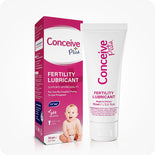
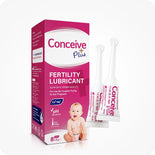
Our fertility-friendly lubricant is scientifically formulated to support sperm motility while providing the comfort you need during your fertile window. Unlike standard lubricants that can harm sperm, Conceive Plus contains the calcium and magnesium ions naturally found in the female reproductive tract.
Identifying Your Fertile Window: The Most Reliable Methods
Accurately identifying the fertile window is the practical challenge. Three complementary methods together provide the most reliable picture.
Ovulation Predictor Kits (OPKs): OPKs detect the LH surge in urine that precedes ovulation by approximately 24 to 36 hours. Standard urine strip tests are highly accurate (97 to 99% for LH detection) and inexpensive. Digital tests provide unambiguous results without the subjective comparison of line intensities.
When to test: Begin testing several days before expected ovulation (day 10 for a 28-day cycle, earlier for shorter cycles or irregular cycles). Test at the same time each day, preferably between 2 PM and 6 PM — LH surges commonly begin in the early morning but may not reach detectable urine concentrations for several hours. Positive OPK result: begin or intensify intercourse frequency immediately, continuing through the following two days.
Cervical mucus monitoring: Cervical mucus changes predictably under oestrogen and progesterone influence through the cycle. In the days approaching ovulation, mucus becomes abundant, clear, and stretchy — resembling raw egg white (EWCM: egg white cervical mucus). This is the most fertile type of mucus; it maintains a neutral pH and physical channels that actively support sperm transport and survival.
Research published in Fertility and Sterility found that pregnancy rates were approximately five times higher on days when egg white cervical mucus was present compared to days when no mucus was observed. Monitoring cervical mucus provides a real-time, equipment-free fertility signal that supplements OPK results.
Basal body temperature (BBT): A sustained rise in waking temperature (taken before any activity, with a sensitive basal thermometer) signals that ovulation has occurred and progesterone is elevated. BBT charting is retrospective — it confirms that ovulation happened — but enables pattern identification across multiple cycles, helping predict when ovulation will occur in future cycles based on personal data.
The Role of Cervical Mucus in Sperm Survival
Cervical mucus is not merely a passive observation tool — it is an active fertility factor. During the non-fertile phases of the cycle, cervical mucus forms a thick, hostile plug that blocks sperm entry into the uterus. In the fertile window, under rising oestrogen, mucus becomes sperm-permissive: it thins, becomes alkaline, and forms molecular channels that actively transport and select sperm.
Research has shown that in fertile-quality cervical mucus, sperm can survive for up to five days. In the absence of fertile mucus, survival drops to hours. This is why the presence of egg white cervical mucus is both a reliable fertility signal and a biological prerequisite for maximal sperm survival.
Many women — particularly those with irregular cycles, PCOS, previous hormonal contraceptive use, or certain infections — have reduced or absent fertile-quality mucus despite ovulating. This is where fertility-friendly lubricants become relevant. Standard lubricants (even water-based ones) have been shown in multiple studies to reduce sperm motility and viability. A fertility-friendly lubricant that mimics fertile cervical mucus — with physiological pH, appropriate osmolality, and hydroxyethylcellulose gel structure — can support sperm survival and motility when natural mucus is insufficient.
A Complete Fertility Support System for Both Partners
When both partners optimise their nutrition, conception chances improve significantly. Conceive Plus offers a complete range of scientifically formulated fertility supplements for women and men — plus our fertility-friendly lubricant.
Intercourse Frequency: The Evidence-Based Approach
How often should you have intercourse during the fertile window? The evidence provides clear guidance.
For men with normal sperm parameters, daily ejaculation does not reduce sperm quality. Research consistently shows that abstinence longer than five days significantly reduces sperm concentration and increases DNA fragmentation. The outdated advice to abstain for several days before peak fertility to "save up sperm" is counterproductive for most men.
The practical recommendation: have intercourse every one to two days throughout the fertile window. Beginning two to three days before the predicted OPK positive and continuing through the day after the positive maximises the probability that viable sperm are present at the moment of ovulation. If daily intercourse is manageable, concentrate it in the three days centred on the OPK positive.
For men with low sperm count or poor motility, more targeted timing — focusing on the one or two highest-probability days (the day before and day of ovulation) — can optimise the chances of natural conception. A reproductive urologist or fertility specialist can provide personalised guidance.
Position and Post-Intercourse Behaviour: What Actually Matters
Several post-intercourse behaviours are commonly believed to improve conception chances, most of which lack evidence.
Lying down after intercourse: Research does not support the idea that lying still for 15 to 30 minutes after intercourse improves pregnancy rates. Studies tracking sperm movement with ultrasound have found that sperm enter the cervix within 15 minutes regardless of position. Sperm that will reach the fallopian tubes do so within 30 to 60 minutes — before any semen leakage would occur.
Sexual position: No position has been shown to improve conception rates. Sperm transport to the fallopian tubes is an active biological process driven by cervical crypts and uterine contractions, not gravity. Any position that allows ejaculation to occur near the cervix is equivalent.
Female orgasm: There is limited evidence that uterine contractions associated with orgasm may slightly increase sperm transport. This remains controversial. Regardless, stress-free, enjoyable intercourse is likely beneficial simply by reducing stress hormones that can disrupt ovulation and cervical mucus.
Common Timing Mistakes That Reduce Conception Chances
Waiting for ovulation rather than anticipating it: By the time a BBT temperature rise is confirmed, ovulation has already occurred and the egg may be degenerating. The fertile window is before and at ovulation, not after.
Testing OPKs only in the morning: LH surges begin in the early morning and may not reach detectable urine concentrations until afternoon. Women who only test first thing in the morning frequently miss the surge entirely. Test between 2 PM and 6 PM for best results.
Assuming ovulation is on day 14: This applies only to a minority of women. Ovulation timing varies considerably between individuals and between cycles. Tracking with OPKs and cervical mucus provides personal, cycle-specific data rather than relying on a population average.
Using standard lubricants: Many couples use lubricants during intercourse without realising that most commercial lubricants — including water-based and silicone-based products — are toxic to sperm. A study found that common lubricants reduced sperm motility by up to 60% and sperm vitality by up to 34% within 30 minutes. Using a fertility-friendly lubricant is an important safeguard during the fertile window.
Having intercourse too infrequently: Some couples, believing that limiting intercourse "saves up" sperm, have intercourse only once or twice at their estimated ovulation date. Given cycle variability, a single-day strategy misses the fertile window entirely when ovulation differs from expectations. The every-other-day approach starting with the appearance of fertile mucus is more robust.
Tracking Over Multiple Cycles
Conception for healthy couples often takes several months even with perfect timing. Research suggests that approximately 20% of healthy, fertile couples conceive in the first cycle of trying, 50% within three cycles, 75% within six months, and 90% within twelve months.
Tracking across multiple cycles reveals your unique ovulation pattern and enables increasingly precise targeting. Many women discover that their personal ovulation timing differs from day 14 by several days — information that meaningfully changes their timing strategy.
If after 12 months of accurate timing (6 months if the female partner is over 35) pregnancy has not occurred, both partners should seek fertility evaluation. Early investigation is always preferable to prolonged waiting, as many treatable conditions — including ovulatory disorders, sperm abnormalities, and tubal factors — become easier to address when identified early.
Frequently Asked Questions
Q: When is the best time to have intercourse to get pregnant?
The highest conception probability is in the 2-3 days immediately before ovulation. Having intercourse every 1-2 days from the first appearance of fertile cervical mucus through the day after a positive OPK test covers the peak fertile window reliably.
Q: How do I know when I am most fertile?
The most reliable approach is combining ovulation predictor kits (which detect the LH surge 24-36 hours before ovulation) with cervical mucus monitoring (fertile-quality mucus appears in the days before ovulation). Together, these give a highly accurate picture of your personal fertile window.
Q: Does having intercourse every day increase chances?
For men with normal sperm parameters, daily intercourse during the fertile window is effective and does not reduce sperm quality. The key is concentrating frequency during the 3-day window centred on predicted ovulation. For men with low sperm count, every-other-day or targeted single-day timing may be better.
Q: Can I get pregnant outside the fertile window?
It is highly unlikely. Conception requires sperm to fertilise the egg within 12-24 hours of ovulation. Outside the 6-day fertile window (5 days before + day of ovulation), conception probability approaches zero in any given cycle.
Q: Should I use a lubricant during the fertile window?
If you need lubrication, use a fertility-friendly lubricant specifically designed to be sperm-safe. Standard lubricants — including many water-based ones — reduce sperm motility and viability significantly. Fertility lubricants maintain physiological pH and osmolality to support sperm survival.
Q: Does lying down after sex help you get pregnant?
The evidence does not support this practice making a meaningful difference. Sperm enter the cervix within minutes and reach the fallopian tubes within 30-60 minutes regardless of position. Sperm transport is an active biological process, not gravity-dependent.
Q: Is there a best time of day for intercourse when trying to conceive?
Research does not clearly support one time of day over another for conception probability. Practically, avoiding times when either partner is very tired reduces stress and maintains intimacy. What matters most is the day relative to ovulation, not the time of day.
Q: How many months should I try before seeking fertility help?
Most guidelines recommend seeking evaluation after 12 months of trying if you are under 35, or 6 months if 35 or older. If there are known fertility risk factors (irregular cycles, previous pelvic infections, PCOS, history of STIs), earlier evaluation is appropriate.
Q: Can irregular cycles affect my timing approach?
Yes. Women with irregular cycles should use OPKs throughout a wider window (starting early) and rely on cervical mucus monitoring for real-time signals rather than calendar-based prediction. Wearable fertility trackers can also help identify patterns in irregular cycles.
Q: Does male orgasm timing affect conception?
Male orgasm is necessary for ejaculation, but the timing of orgasm relative to the female partner does not affect conception probability. Some evidence suggests female orgasm may slightly increase sperm transport through uterine contractions, but this is not required for conception.
Conclusion
Timing intercourse within the fertile window is one of the most evidence-based and immediately actionable strategies for improving monthly conception rates. By combining ovulation predictor kits with cervical mucus monitoring, identifying your personal ovulation pattern across several cycles, and concentrating intercourse in the two to three days before ovulation, you give every cycle its maximum chance.
Pair precise timing with fertility-friendly lubrication when needed, maintain regular intercourse frequency to ensure healthy sperm quality, and give your body optimal nutritional support. Conception is a numbers game — and the right timing tips the odds significantly in your favour.
Support Every Attempt with Conceive Plus
Our fertility-friendly lubricant is scientifically formulated to support sperm motility while providing the comfort you need during your fertile window. Unlike standard lubricants that can harm sperm, Conceive Plus contains the calcium and magnesium ions naturally found in the female reproductive tract.